


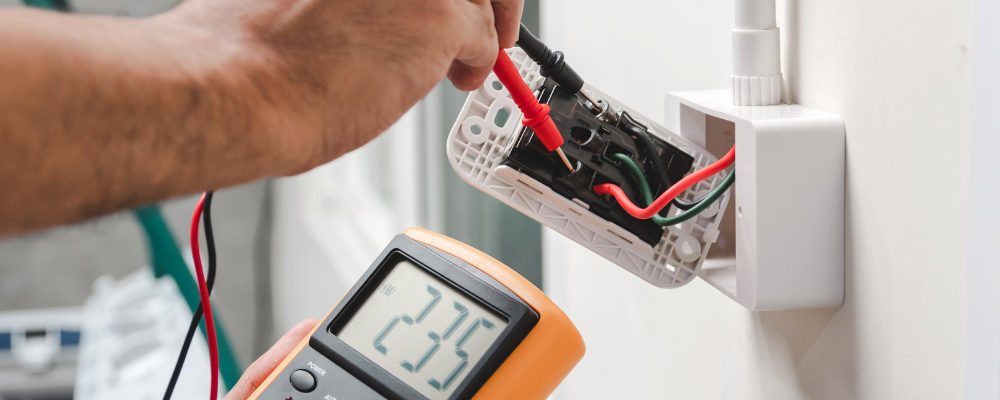
Is your house trying to tell you something? Discover 5 signs it’s time for a rewire—before things spark out of control. Florida homes, read this! or call us at (727)626-3414

Summer is the ideal time to upgrade your electrical panel. Avoid AC overloads, flickering lights, and fire hazards with expert tips from Pinellas County Electric.

Stay cool this Florida summer without the high electric bill. Discover smart thermostat tips, ceiling fan hacks, and energy-efficient lighting upgrades from Pinellas County Electric.

Hello, friends and family!

Hello, fellow Floridians!

Hey there, wonderful readers! Hurricane season is upon us, and while we can't control the weather (yet!), we can definitely help you get ready for it. At Pinellas County Electric , your safety is our top priority, and we believe that a little preparation goes a long way. To make storm prep a breeze, we’ve put together a fantastic, free eBook: “Ride Out the Storm: Your Ultimate Guide to Hurricane Preparedness.” It's packed with practical tips, essential checklists, and just enough humor to keep things light. Because let’s face it, a little laughter can make even the stormiest days brighter! What’s Inside: Storm Categories Demystified: Because understanding your frenemies is the first step. Home Fortification Tips: Turn your home into a fortress against the winds. Emergency Kit Must-Haves: All the essentials, plus a few fun extras (chocolate, anyone?). Evacuation Planning: Get your route sorted so you don’t end up in Timbuktu. Safety Tips During and After the Storm: We’ve got your back through it all. Why wait until the sky turns grey? Download your free guide now and become the hurricane hero of your household.

Although, there is a shift into alternate forms of energy such as solar and geothermal power in recent years, the truth is that normal energy and residential electrical services will be in need for quite some time into the future. Like anything involved with the generation of energy, electricity-based systems are prone to certain issues that must be addressed.
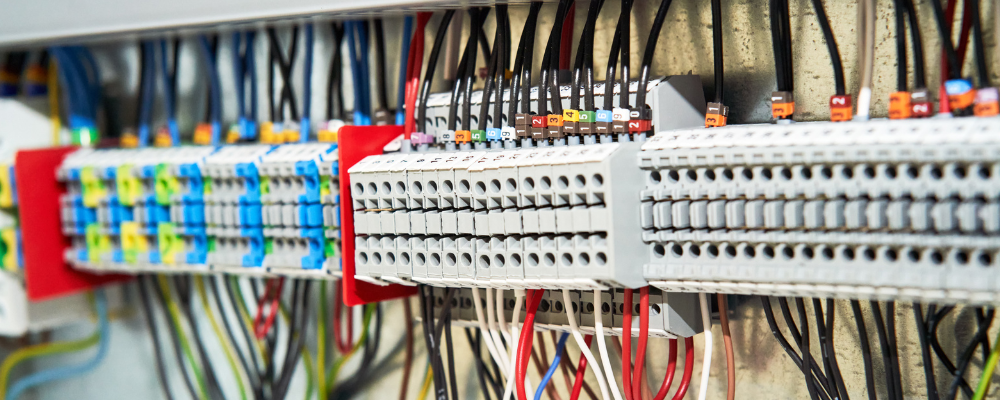
Being a homeowner is like riding a rollercoaster. Fun, a bit of a challenge, and there’s always something new around the corner. One such twist? Getting to know your electrical service panel – the unsung hero that sends power zipping around your cozy abode. Think of the electrical panel as the maestro of your home’s symphony. It’s the genius that connects the electrical vibes from the outside world to the groovy music in your home, or in other words it manages the electricity from the electric company and distributes it throughout your home. So, it’s super important to get to know your panel, and when you do you’ll be one step closer to becoming a home-electricity wizard. Finding That Elusive Panel Now, your electrical panel is a bit of a shy type. It usually hides in spots like the garage, basement, utility closet, or even in the sneaky kitchen pantry. Those with vintage homes? Peek outside. It might just be chilling on an exterior wall. A Peek Inside the Panel Pop open that panel door and voila! Main Circuit Breaker: It’s like the head honcho of the gang. Shut it off, and your home goes into power nap mode. Circuit Breakers: Your panel’s little soldiers. They come as single-pole for 120 volts and double-pole for 240 volts – ideal for those appliances that like a bit more juice, like your trusty air conditioner. Sub-panel: A fancy add-on if you’ve got a generator or extra breaker space. Panels come with style and size. Ranging from 100 amps to a whopping 400 amps, the modern home usually rocks at least a 200 amp because, well, who lives without a heater or AC? Panel Types 101 Main Breaker Panel: Your everyday, standard panel. It’s all about controlling and distributing power. This is the most commonly used panel type, which controls electricity that flows into each of the areas in your home. It is designed to distribute a certain amperage to each circuit and cut power when needed to prevent overheating. Fuse Boxes: These bad boys use fuses to keep everything in check. When excess current flows through a particular circuit, the fuse shorts out, so you have to make sure they allow enough current to flow to your appliances and keep an eye on ’em! Main Lug Panels: These panels have lugs that the line wires can run into, so they do not have a main breaker. You can connect the main lug to your main breaker to act as a sub-panel, with the latter being a separate disconnect. Transfer Switches: Got a generator? These switches will transfer power from the generator to the electrical power in the main panel to supply power even during outages. Getting regular check-ups, at least once a year will ensure safety and give it a long life of 20-30 years! Give Pinellas County Electric a buzz at 727-88-VOLTS to ensure all’s smooth and zappy.

Home inspections are vital when shopping for a home or planning a renovation. Inspections give you a clear picture of the condition of a house and problems that may affect the sale price or remodeling project size. While home inspectors generally look into different aspects of the property, it is often recommended to also get an electrical home inspection to pinpoint problems that may have been overlooked.



