
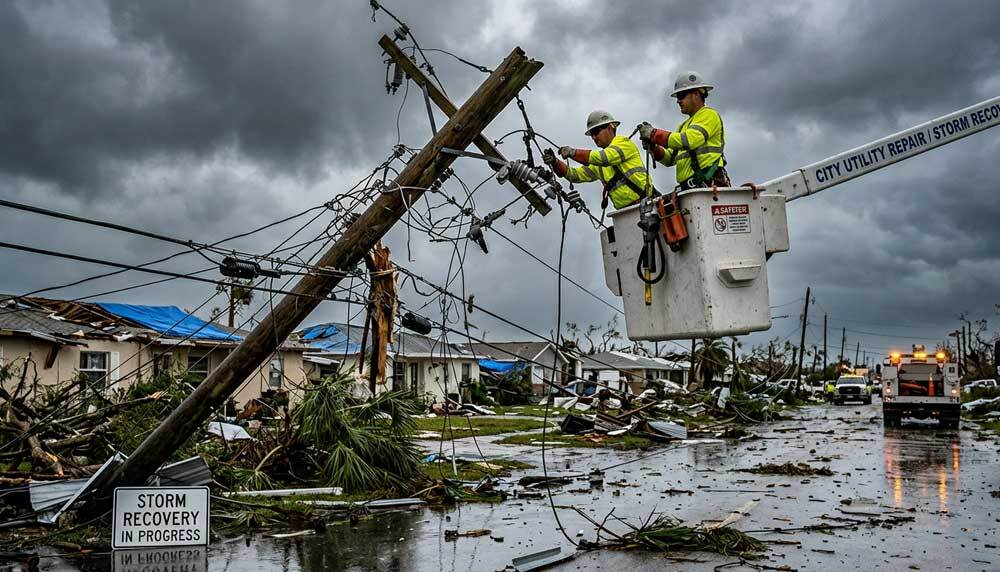
Key Takeaways
- Choosing the lowest electrical bid for hurricane recovery projects can lead to higher long-term costs due to poor workmanship, code violations, and increased maintenance.
- Hurricanes Helene and Milton highlighted the risks of prioritizing cost over quality in electrical contracting, resulting in safety hazards and expensive repairs.
- Proper vetting of electrical contractors, including checking credentials and past performance, is essential to ensure reliable and safe outcomes.
- Investing in quality electrical work upfront can prevent costly failures, downtime, and liability issues after severe weather events.
- Decision-makers should balance initial bid price with contractor reputation, experience, and adherence to safety standards to achieve the best value.
The True Costs of Cutting Corners
The aftermath of Hurricanes Helene and Milton has been devastating for so many families and businesses throughout Pinellas County and the Tampa Bay area. Homes were flooded, roofs were damaged, electrical systems were compromised, businesses were disrupted, and many people were faced with repair bills they simply were not prepared for.
At Pinellas County Electric, we understand that reality. We understand that for many homeowners, this isn’t just about repairing a house; it’s about figuring out how to financially recover while trying to put their lives back together.
Because of that, we have made a conscious effort to find cost-effective ways to complete necessary electrical repairs without sacrificing the quality or safety of the installation. But there is something I have been noticing more and more while personally going into the field and meeting with homeowners to quote hurricane-related repairs. Even when we reduce pricing substantially from what the work might normally cost, many homeowners are understandably hesitant to move forward. After everything people have already spent, every additional dollar matters.
I completely understand that hesitation. But there is also something I believe homeowners need to hear: electrical work is one of the areas of your home where choosing strictly by the lowest price can become extremely expensive later.
Evaluating Value Beyond the Quote
Over the years, we have been called into many homes and businesses after another contractor or electrician completed the original work with the lowest electrical bid. Sometimes everything looks fine from the outside. The lights work. The receptacles have power. The panel is energized. The homeowner paid the bill and assumed the job was finished correctly.
Then the problems begin, often stemming from low bids that initially seemed attractive.
We have opened walls, panels, junction boxes, and equipment only to discover improper connections, undersized wiring, incorrect breakers, poor grounding, overloaded circuits, inaccessible junctions, improperly installed conduit, and other workmanship issues. In some situations, correcting the problem isn’t as simple as repairing one connection. The previous work has to be removed and installed again correctly.
That’s when the inexpensive electrical job becomes very expensive.
Lessons Learned from Storm Aftermaths
Unfortunately, much of the material and labor the homeowner already paid for may not be reusable. They essentially pay once to have the work installed incorrectly and then pay again to have someone remove it and install it properly. That is before considering the potential damage, downtime, or safety issues that improper electrical work can create.
This is why I encourage homeowners rebuilding after Helene and Milton to look beyond the number at the bottom of an estimate. Ask who is actually performing the electrical contracting work. Ask whether they are properly licensed and insured for the work being performed. Ask what materials are being installed. Ask how the work will be permitted and inspected when required. Ask how long the contractor expects the installation to take. Most importantly, make sure you understand exactly what is included in the price.
This becomes especially important when hiring a general contractor to manage a larger hurricane restoration.
Risks of Prioritizing Short-Term Savings
Many homeowners assume that once they hire a general contractor, they automatically have to use whatever electrician, plumber, or HVAC contractor the GC chooses. Homeowners should discuss this before signing a construction agreement. Depending on the contract and project requirements, you may be able to request or bring qualified licensed trades that you trust and have them coordinate directly with the general contractor.
There is nothing inherently wrong with a general contractor having a preferred team of subcontractors. Good general contractors build relationships with excellent tradespeople, and those relationships can make a project run smoothly. The concern is when subcontractor selection becomes based primarily on obtaining the lowest possible price rather than workmanship, experience, and long-term reliability.
Here is something homeowners should understand about the construction business.
You may be paying the general contractor a normal market price for the electrical portion of the project, but that doesn’t necessarily mean the electrical subcontractor is receiving that amount. General contractors have overhead, management costs, and profit requirements, so subcontractors are often expected to provide competitive pricing. Competition itself isn’t the problem. The problem occurs when a subcontractor has reduced the price so aggressively that there is very little room left in the job.
When that happens, something eventually has to give.
How Quality Impacts Long-Term Expenses
Sometimes it is the quality of the materials. Sometimes it is the amount of time spent on the installation. Sometimes fewer experienced workers are assigned to the project. And sometimes a very low initial proposal is followed by numerous change orders whenever something falls outside the narrowest interpretation of the original scope.
The homeowner believed they were getting the least expensive electrical contracting services, assuming they had secured the lowest electrical bid. By the end of the project, that may no longer be true.
At Pinellas County Electric, we take a different approach to estimating. We look at realistic labor requirements, the complexity of the installation, appropriate materials, and the amount of time experienced electricians should reasonably need to complete the work correctly. We would rather provide an accurate number upfront than intentionally submit an artificially low number and attempt to recover the difference later through unnecessary extras.
That doesn’t mean changes never happen. Hurricane restoration and remodeling can uncover conditions nobody could reasonably see beforehand. Walls get opened, and unexpected damage is discovered. Underground conduits can be damaged. Existing wiring may be unusable. Those are legitimate unforeseen conditions and should be communicated clearly to the homeowner.
But there is a big difference between a legitimate unforeseen condition and building a project around change orders.
We also try to leave reasonable flexibility within our estimates. If we’re already performing a substantial project and a homeowner asks us to add or relocate something minor while we’re there, such as a switch or receptacle, we don’t believe every small request should automatically turn into another bill whenever the circumstances reasonably allow us to accommodate it. We want the customer to feel like we’re working with them, not waiting for an opportunity to charge them again.
After two major hurricanes, homeowners deserve that kind of consideration.
If you’re rebuilding your home or business, don’t be afraid to ask your general contractor who will actually be performing the electrical, plumbing, and HVAC portions of your project. Ask whether you can obtain your own proposals. Ask whether a qualified contractor you already know and trust can coordinate with the GC. Have that conversation before signing the construction contract whenever possible.
Your electrician isn’t simply installing outlets and switches. The electrical system runs throughout your walls, ceilings, attic, equipment, and major appliances. Much of that work disappears once drywall and finishes are installed. You want to know that the work hidden behind those walls was done correctly.
We understand why homeowners are searching for affordable solutions after Hurricanes Helene and Milton. We don’t fault anyone for comparing prices. In fact, you should compare prices. Get multiple estimates. Ask questions. Understand what you’re buying.
Just make sure you’re comparing more than numbers.
Compare the scope of work. Compare the materials. Compare licensing and insurance. Compare experience. Compare warranties. Compare what is included and excluded. Compare whether permits and inspections are being handled correctly. And compare the reputation of the company that will be standing behind that electrical system years after the hurricane repairs are finished.
The lowest bid or even low bids can certainly save money today. But if the lowest electrical bid was achieved by cutting the things that make an electrical installation safe, reliable, and long-lasting, the savings can disappear very quickly.
We’ve seen homeowners pay twice for the same electrical work, and that’s something we would rather help people avoid.
FAQs
Why can the lowest electrical bid become the most expensive?
The lowest bid often cuts corners on materials, labor, or safety, leading to future repairs, code violations, and increased liability, which ultimately raises total project costs.
What problems arose after Hurricanes Helene and Milton due to low-bid contractors?
Communities experienced electrical failures, safety hazards, and costly repairs because some contractors prioritized low costs over quality and compliance.
How can organizations avoid issues with low-bid electrical contractors?
By thoroughly vetting contractors, checking references, verifying licenses, and prioritizing experience and safety records over just the lowest price.
What are the long-term benefits of choosing a quality electrical contractor?
Higher-quality work reduces the risk of failures, ensures code compliance, enhances safety, and minimizes future maintenance and repair costs.
What should be considered besides price when selecting an electrical contractor?
Decision-makers should evaluate contractor reputation, experience with similar projects, safety practices, and adherence to industry standards.
At Pinellas County Electric – The Panel Pros, our goal isn’t to be the cheapest electrical contracting service in Pinellas County. Our goal is to find the most cost-effective way to provide professional electrical work that is done correctly, safely, and at a fair price.
Contact Pinellas County Electric Today!
After everything our community has been through, we believe homeowners deserve repairs they can afford, and electrical work they shouldn’t have to pay someone else to redo later.
Do it once. Do it right. And know who’s working behind your walls.


