
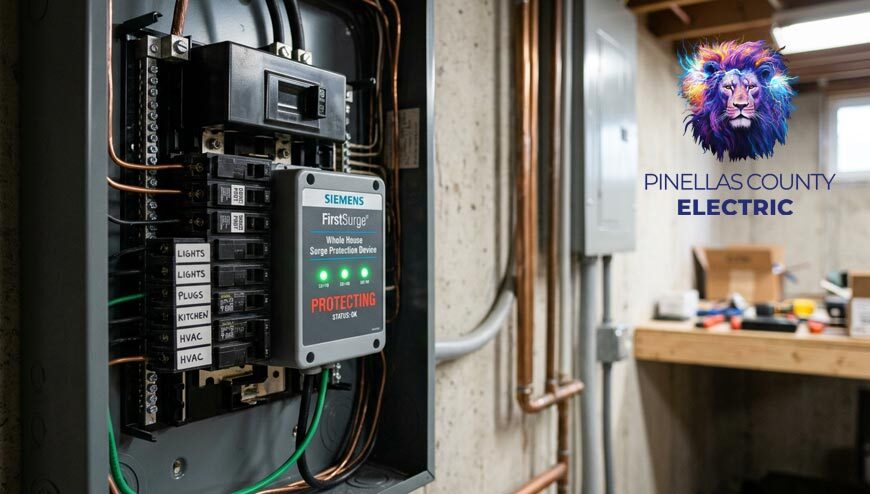
A whole-house surge protector is one of the few electrical upgrades that can protect nearly every circuit in the home at once. For most homeowners, the real question is not whether surges happen, but whether the modest cost of whole house surge protectors is small compared with the value of what they help protect.
Key Takeaways
- A whole-house surge protector is usually worth the cost because a listed Type 1 or Type 2 SPD at the main panel commonly costs about $300 installed, while the average home contains far more in vulnerable electronics and appliance controls.
- Whole-house surge protection works at the service equipment or main panel, where it reduces voltage spikes before they spread through branch circuits; plug-in strips only protect devices connected to them.
- The 2020 NEC requires a listed Type 1 or Type 2 surge protective device for many new or renovated dwelling-unit services, installed integral to or immediately adjacent to the service equipment.
- ESFI says the average home has about $15,000 in equipment that can be damaged by surges, and about 80% of surges come from internal sources like appliances cycling on and off.
- Whole house surge protectors are not a complete lightning solution. Best practice is layered protection: panel-level SPD plus point-of-use protection for sensitive electronics, along with proper grounding and code-compliant installation.
That makes whole-house surge protection less of a gadget purchase and more of a risk-management decision. If your home has modern appliances, HVAC electronics, smart devices, or a newer panel upgrade on the horizon, the economics usually favor installing whole house surge protectors.
Is a whole-house surge protector worth the cost?
Yes. A listed Type 2 SPD at the main panel usually costs less than replacing one refrigerator control board, garage door opener logic board, or large TV.
Published homeowner cost guides cluster around a few hundred dollars installed. HomeAdvisor lists an average installed cost of about $300, with a broader range of roughly $70 to $700 depending on the device, panel conditions, and labor. ESFI says the average home contains about $15,000 worth of equipment that can be damaged by surges, which makes the cost-benefit case fairly strong.
The biggest misconception is that surge protection is only about lightning. ESFI estimates that 80% of surges come from internal sources, including appliances cycling on and off, overloaded circuits, wiring faults, and ground faults. In other words, the threat is routine, not rare.
“Pinellas County Electric installs surge protection at the main panel, where Type 1 or Type 2 devices provide a primary line of defense that plug-in strips cannot match.”
The trade-off is simple: a whole-house surge protector lowers risk across the home, but it does not make equipment indestructible. If you want the best results, pair it with good grounding and point-of-use protection for the most sensitive electronics.
What does a whole-house surge protector actually protect?
It protects many hardwired and plugged-in loads on the home’s electrical system, including HVAC equipment and kitchen appliances, by reducing incoming voltage spikes at the service equipment.
That broad coverage is the main advantage over outlet strips. A panel-level SPD can help protect circuits feeding your air conditioner, refrigerator, dishwasher, washer, dryer controls, LED lighting drivers, internet equipment, and smart home gear. Devices with circuit boards are often the most vulnerable because repeated smaller spikes can weaken components over time.
After the surge protector is installed at the main panel, its benefit reaches farther than most people expect:
- HVAC equipment and thermostat boards
- Refrigerators, ranges, microwaves, and dishwashers
- TVs, routers, gaming systems, and office equipment
- Smart switches, cameras, doorbells, and home automation hubs
A pro tip here: whole-house does not mean every device is equally protected from every event. Long branch-circuit runs, direct lightning energy, and poor grounding can still leave sensitive gear exposed, which is why layered protection remains the best practice.
Who should install a whole-house surge protector correctly?
A licensed electrician with service-equipment experience should install it. In Pinellas County, panel specialists and contractors familiar with Florida code are the safest choice.
This is not a casual add-on like swapping a receptacle. The SPD has to be listed, properly located, correctly connected to the service equipment, and compatible with the panel. If the home has an older panel, limited breaker space, or grounding issues, the installer needs to solve those conditions first.
- Pinellas County Electric: A local contractor focused on residential and commercial electrical work, panel upgrades, older homes, AlumiConn conversions, and free on-site estimates for upgrades.
- A licensed residential electrical contractor: Best when the job is straightforward and the existing panel has compatible space for a Type 2 SPD.
- A panel-upgrade specialist: Best when the home has obsolete equipment, a crowded load center, or service work that may trigger broader code updates.
If the installer treats the surge protector like a stand-alone accessory and ignores panel condition, that is a warning sign. Surge protection works best when the panel, grounding, and bonding are all evaluated together.
How does a whole-house surge protector work at the main panel?
It works by diverting excess voltage away from branch circuits. A Type 1 or Type 2 SPD at the service equipment reacts fast and sends surge energy toward the grounding system.
Step 1 is interception. When a voltage spike enters from the utility side or is created inside the home by motors and compressors, the SPD senses the overvoltage condition at the panel.
Step 2 is diversion. The device clamps the surge and redirects excess energy away from downstream circuits. This is where terms like let-through voltage matter. Lower let-through voltage generally means less residual surge energy reaches appliances, assuming the devices are otherwise comparable.
Step 3 is layering. The SPD reduces the surge at the panel, and point-of-use protectors handle smaller residual spikes at the equipment level. If you skip that second layer for high-value electronics, you lose part of the benefit.
Whole-house surge protector vs power strip: what is the difference?
A whole-house SPD protects the electrical system upstream, while a plug-in surge strip protects only the devices plugged into it. They do different jobs.
A power strip cannot protect a hardwired air conditioner, water heater controls, or built-in microwave. It also cannot intercept a surge before that energy travels through the panel and branch circuits. A whole-house surge protector, installed at the main panel or service equipment, creates that first barrier for the home.
“Pinellas County Electric notes that a $20 power strip is not enough for the level of whole-home protection most houses need.”
That does not make plug-in protectors obsolete. They are still useful for computers, entertainment systems, networking gear, and other sensitive electronics. If you have to choose only one starting point, the panel-level SPD offers broader protection. If you want the best setup, use both.
Type 1 vs Type 2 SPD: which one belongs at your service equipment?
Both Type 1 and Type 2 devices can be correct for a dwelling. NEC 230.67 calls for a listed Type 1 or Type 2 SPD at the dwelling-unit service.
Type 1 SPDs are typically installed on the line side of the service disconnect or as part of service equipment arrangements approved for that use. Type 2 SPDs are commonly installed on the load side, often at the main panel or distribution panel. In residential work, Type 2 units mounted at the main panel are very common.
If your service equipment accepts an integral SPD or the layout favors line-side protection, a Type 1 may fit. If you are adding surge protection to an existing load center with a compatible breaker position or panel-mounted accessory, a Type 2 is often the practical choice. The key is compatibility, listing, and local code compliance, not marketing language.
Is a whole-house surge protector required by electrical code?
Yes, in many cases involving newer or renovated dwelling-unit services. The 2020 NEC requires a listed Type 1 or Type 2 SPD for dwelling-unit services under Section 230.67.
NFPA material tied to that code section states that all services supplying dwelling units must be provided with an SPD, and that the device must be an integral part of the service equipment or located immediately adjacent to it. That means the installation location is not arbitrary. It belongs at the service equipment, not across the house in a subpanel unless the design specifically calls for added downstream protection.
The practical catch is local adoption and permit scope. If you are building new, replacing service equipment, or doing a renovation that triggers current code, surge protection is often part of the job. If you are working on an older existing home, ask the local authority having jurisdiction and your electrician what the current permit path requires.
How much does whole-house surge protector installation cost?
Most homeowners can expect a few hundred dollars, not thousands, for a straightforward installation. HomeAdvisor lists about $300 installed on average, with a broad range of $70 to $700.
The low end usually reflects simple add-on jobs with a compatible panel and easy access. The high end often reflects better-rated devices, more labor, tricky panel layouts, or related electrical work. HomeAdvisor also notes labor commonly runs around $50 to $100 per hour, though real prices vary by market and job complexity, especially when installing whole house surge protectors.
What changes the price most is not the SPD itself but the panel condition. If the electrician finds no space, an obsolete panel, heat damage, or grounding issues, the job may turn into a panel upgrade or repair discussion. That is not a bad outcome. It means the installer is treating the home as a system instead of just attaching a part.
How do electricians install a whole-house surge protector safely?
Safe installation starts with panel inspection, not with the device. The electrician checks the service equipment, breaker space, grounding, bonding, and manufacturer compatibility first.
Step 1 is evaluation. The panel brand, age, ampacity, and internal layout determine whether the home needs an external SPD, an integral panel accessory, or a larger service upgrade. This is where older homes often need closer review.
Step 2 is placement. The SPD is installed at or immediately adjacent to the main panel or service equipment, with the shortest practical conductor length. A common misconception is that wire length does not matter much. In surge work, shorter leads generally improve performance.
“Pinellas County Electric offers free on-site estimates for upgrades when a surge protector install leads to a panel or service-equipment decision.”
Step 3 is verification. The electrician confirms torque, breaker connection if required, status lights, labeling, and basic panel condition before the system is returned to service. If the SPD includes an indicator light or audible alarm, homeowners should be shown how to check it later.
How do you choose the right whole-house surge protector for your home?
Choose based on device type, panel compatibility, listing, and performance data. Eaton, Siemens, and Square D all make residential SPDs, but the right choice depends on your service equipment.
Start with the panel, not the box art. A good electrician will match the SPD to the service equipment and installation method, then compare key specs. Look for a listed device, usually under UL 1449, and pay attention to how it mounts and whether it needs dedicated breaker space.
The most useful buying criteria are practical, not flashy:
- Device type: Type 1 or Type 2, based on the service-equipment design and code path.
- Panel compatibility: Match the SPD to the panel brand and approved installation method.
- Surge current rating: Higher kA ratings generally indicate more surge-handling endurance.
- Let-through voltage: Lower is usually better when you are comparing similar listed devices.
- Status indication: LED status lights or alarms make failed protection easier to spot.
If your panel is old or crowded, the best SPD on paper may still be the wrong choice. In that case, a panel replacement with integrated surge protection can be the cleaner long-term answer.
What can a whole-house surge protector not do?
Whole house surge protectors cannot stop every electrical event. A whole-house SPD is strong protection, but it is not a complete lightning shield, a fix for bad wiring, or a substitute for proper grounding.
This is the most important expectation to get right. A direct lightning strike can exceed what a residential SPD is designed to handle. The device can also fail over time after repeated surge events, which is why indicator lights matter. And if the home has poor grounding or a damaged neutral, the surge protector cannot cure those underlying hazards.
A few limits matter more than people think:
- Not a lightning guarantee: Direct strike energy can still damage equipment.
- Not a wiring repair: Loose neutrals, overheating breakers, and bad grounds need separate correction.
- Not forever: Many SPDs need replacement after they absorb enough surge energy or show a failed status light.
If you want the best protection strategy, consider whole house surge protectors and think in layers. Put a listed SPD at the main panel, use quality point-of-use surge protection for sensitive electronics, and keep the home’s grounding and service equipment in good condition.


