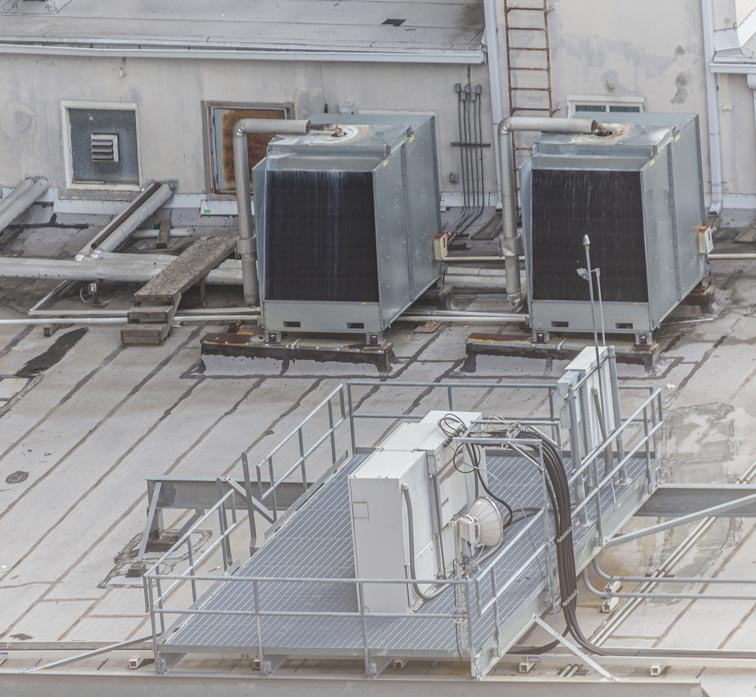
HVAC / RTU Electrical Connections
Commercial HVAC & RTU Electrical Connections in Clearwater, St. Petersburg, Largo, Dunedin, and the remaining Pinellas County, FL
Commercial air conditioning in Florida isn’t optional equipment. When an HVAC system goes down in the middle of summer, especially in a restaurant, retail store, office, warehouse, medical facility, or manufacturing operation, it can quickly turn into an emergency. At Pinellas County Electric, we handle the electrical side of commercial HVAC and rooftop unit installations throughout Clearwater, St. Petersburg, Largo, Pinellas Park, and surrounding Pinellas County communities.
This includes new electrical feeds, replacement RTU connections, breakers, disconnects, conduit and wiring, 3-phase power, troubleshooting, electrical upgrades, and DITEK surge protection for commercial HVAC equipment.
After spending decades in the electrical trade, I’ve learned that HVAC change-outs aren’t always as simple as they first appear. I’ve received plenty of calls that basically start with, “Kevin, we’re replacing the rooftop unit. Everything is already there. We just need you to hook it back up.” Sometimes it really is that straightforward. Other times I get there, look at the new equipment nameplate, inspect the existing electrical system, and realize we have a few things to address before I’m comfortable energizing that new equipment.
That’s why we verify what is actually there instead of assuming the old electrical installation is automatically correct for the new unit.
Key Takeaways
Equipment Wiring & Maintenance
Pre-Installation System Checks
Multi-Voltage & Phase Support
DITEK Surge Protection
The HVAC Contractor Handles the HVAC. We Handle the Power.
I like to explain the relationship this way: the HVAC contractor knows the mechanical equipment, and we know the electrical system feeding it. The HVAC contractor may be setting the rooftop unit, working with ductwork, refrigerant systems, controls, and the mechanical side of the installation. Our responsibility is making sure the building provides the electrical power that equipment requires.
Whenever possible, I want the new equipment specifications before installation day. A photograph of the RTU nameplate or the manufacturer’s electrical data can answer many of my questions before we even arrive. I’m looking at the voltage and phase, but I’m also paying close attention to the MCA and MOCP. MCA stands for Minimum Circuit Ampacity, while MOCP stands for Maximum Overcurrent Protection. Those values are important when evaluating the conductors and overcurrent protection supplying the equipment.
This is one area where experience has taught me not to make assumptions. You can’t simply look at an HVAC unit’s operating amperage and decide what size breaker and wire you think should feed it. Commercial HVAC equipment has specific electrical requirements. We read the equipment information, evaluate the existing installation, and determine what needs to happen before connecting it.
I've Seen Plenty of "It's Just a Change-Out" Jobs
One of the most common situations I’ve personally run into is an HVAC contractor replacing an older rooftop unit with a newer model. The old equipment might have been sitting on that roof for 15 or 20 years, so everybody naturally assumes the existing electrical circuit can simply be disconnected from the old unit and reconnected to the new one.
- Sometimes it can.
- Sometimes it can't.
The new unit may have a different MCA or MOCP. It could require different overcurrent protection. The existing disconnect may be deteriorated or improperly sized for the new equipment. The conductors may need to be evaluated. If it’s a fused disconnect, the fuses need to be checked against the new equipment requirements. We may also uncover electrical conditions that have existed for years but become obvious once we’re actually inspecting the circuit.
That’s why I don’t like simply landing wires and turning something on. I want to know what I’m connecting and what is supplying it. If we can get involved before the crane arrives and the new RTU is sitting on the roof, even better. I’d rather identify a required electrical change beforehand than have an HVAC crew, crane operator, property manager, and business owner standing around waiting because the new equipment can’t be energized.
Commercial 3-Phase HVAC Equipment
Many larger commercial rooftop units operate on 3-phase power. Depending on the property and equipment, we may encounter 208V 3-phase, 480V 3-phase, or other electrical configurations. One thing I always emphasize is that saying something is “3-phase” doesn’t tell me everything I need to know. We still need the correct voltage and electrical characteristics for that particular piece of equipment.
Phase conditions can also be important with 3-phase HVAC equipment. If there’s a loss of one phase or another abnormal voltage condition, the equipment may not operate properly. When required for startup, phase sequence and proper equipment operation should be verified in coordination with the HVAC contractor and manufacturer requirements.
I’ve learned over the years that having voltage doesn’t necessarily mean you have the correct power. That’s why we test instead of guessing.
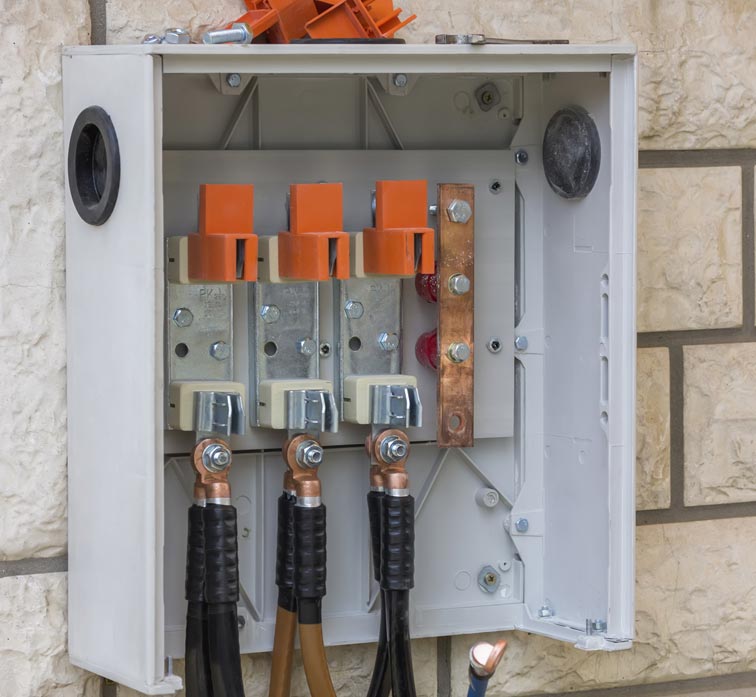
RTU Disconnects Take a Beating in Florida
One of the first things I’ll inspect when I’m working around an existing rooftop unit is the disconnect. These disconnects spend their entire lives sitting in one of the harshest environments we have in Florida. They deal with intense sunlight, extreme rooftop temperatures, rain, humidity, thunderstorms, and, especially near Clearwater Beach and our other coastal communities, salt-laden air.
I’ve opened rooftop disconnects and found corrosion, deteriorated components, overheated connections, damaged wiring, loose terminations, and equipment that has simply reached the end of its useful life. If we’re connecting thousands of dollars of brand-new HVAC equipment, I’m not interested in blindly feeding it through electrical equipment that’s already showing signs of failure.
We inspect what’s there. If it’s in good condition and appropriate for the new equipment, great. If it isn’t, that’s the time to address it.
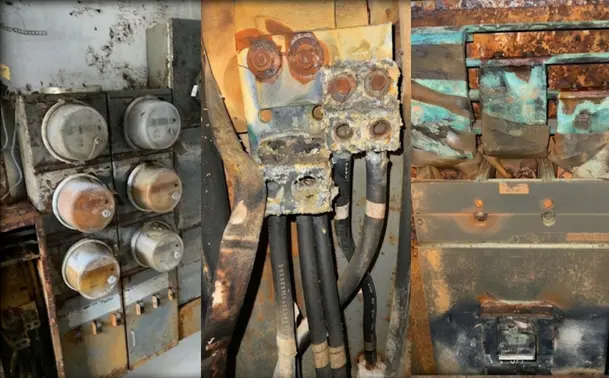
When I Find Burnt Wiring, I Want to Know Why
Another lesson the electrical trade has taught me is that finding a burnt wire isn’t the end of the troubleshooting process. It’s the beginning.
If I open a disconnect or panel and find an overheated conductor, my first question is:
Why did this happen?
Was the connection loose? Was corrosion involved? Was there excessive current? Was the conductor damaged? Was there a termination problem? Was something happening inside the HVAC equipment that contributed to the condition?
I’ve seen firsthand what loose and overheated electrical connections can eventually do. Simply cutting off the burnt portion, reconnecting the wire, and walking away without investigating the cause doesn’t answer the most important question.
What made it burn in the first place?
Our goal is to find the electrical problem and determine why it happened, not simply make the evidence disappear.
Protecting Commercial HVAC Equipment With DITEK Surge Protection
This is another area that has become increasingly important to me, especially here in Florida.
We’re living and working in an area that experiences frequent thunderstorms, lightning activity, utility disturbances, and other electrical events. At the same time, modern commercial HVAC systems contain increasingly sophisticated electronic components and controls. That can represent a significant investment for a commercial property owner.
That’s why we recommend considering DITEK surge protection when installing or replacing commercial HVAC equipment.
Surge protection isn’t something I look at as an excuse to promise that nothing can ever happen to your equipment. No surge protective device can make that promise. What it can do is provide an additional layer of protection by helping divert or limit damaging transient overvoltage before that electrical energy reaches sensitive equipment.
For me, it comes down to protecting the investment.
If a business owner is spending thousands—or tens of thousands—of dollars replacing commercial HVAC equipment, I think it’s worth having a conversation about the electrical system protecting that investment.
Depending on the property, we may recommend surge protection at the electrical service or distribution equipment along with equipment-level protection for important HVAC systems. This layered approach can help reduce the amount of surge energy that reaches sensitive equipment.
DITEK is a brand we trust and use because surge protection isn’t an area where I want to install the cheapest device I can find just to say there’s one in the panel. We want the surge protective device selected and installed appropriately for the electrical system and equipment being protected.
Florida Lightning Isn't the Only Reason for Surge Protection
When people hear “surge protection,” they usually immediately think about lightning.
Lightning is certainly part of the conversation here in Pinellas County, but electrical transients can come from other sources as well. Switching events and equipment operation can create voltage disturbances within an electrical system. Utility-side events may also affect the power entering a property.
That’s why I don’t look at surge protection strictly as a hurricane-season product.
Commercial HVAC equipment needs to operate year-round, and electrical disturbances don’t check the calendar.
For properties with multiple rooftop units, refrigeration equipment, electronic controls, commercial kitchens, manufacturing machinery, or other expensive electrical equipment, it can make sense to look at surge protection as part of the building’s overall electrical strategy rather than protecting one individual appliance.
Sometimes the Air Conditioner Isn't the Problem
I’ve also been called into commercial buildings because the air conditioning wasn’t operating and everyone initially assumed the HVAC equipment had failed. Sometimes that’s exactly what happened. But not always.
We’ve encountered electrical problems supplying equipment, including tripped or failed breakers, blown fuses, deteriorated disconnects, loose connections, damaged conductors, voltage problems, and loss of a phase.
This is where cooperation between the HVAC contractor and electrician becomes important. The HVAC technician understands what’s happening inside the equipment. We can determine whether the electrical system is delivering what that equipment is supposed to receive.
Our job isn’t to guess whether it’s an HVAC problem or electrical problem. We test it and follow the problem.
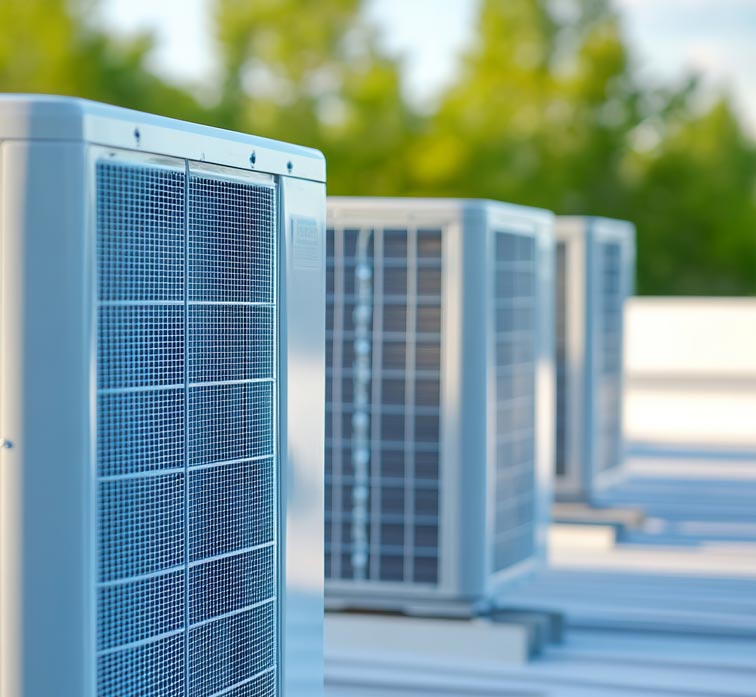
New HVAC Installations & Multiple Rooftop Units
When we’re dealing with a new commercial HVAC installation instead of a simple replacement, we start by evaluating the building’s electrical system. We need to know whether the existing service and distribution equipment have sufficient capacity, where the new circuits will originate, what conductors and overcurrent protection are required, where disconnects will be installed, and how we’re physically going to get power to the equipment.
Projects involving several RTUs require even more planning because we’re no longer evaluating one new load. We’re looking at the effect multiple pieces of equipment can have on the electrical system.
This is why I encourage property managers, HVAC contractors, and general contractors to involve us early. Send me the mechanical equipment schedule. Send me the RTU specifications. Let us look at the electrical requirements while everybody is still planning the job.
A little coordination upfront can prevent a lot of expensive downtime later.
Frequently Asked Questions About Commercial HVAC & RTU Electrical Connections
Does an electrician need to connect a commercial rooftop HVAC unit?
Commercial HVAC equipment needs an electrical supply that meets the equipment specifications and applicable electrical requirements. The work may involve breakers, conductors, disconnects, fuses, raceways, grounding, surge protection, and other electrical components. Pinellas County Electric works alongside HVAC contractors to handle the electrical portion of commercial HVAC installations.
Can the electrical circuit from my old rooftop unit be reused?
Possibly, but we verify it before connecting the replacement equipment. The new RTU’s voltage, phase, MCA, MOCP, and manufacturer requirements need to be compared with the existing breaker, conductors, disconnect, and electrical supply. A replacement unit does not automatically have the same electrical requirements as the unit it replaces.
What do MCA and MOCP mean on a commercial HVAC unit?
MCA means Minimum Circuit Ampacity and is an important value used when determining the required conductor ampacity for the equipment. MOCP means Maximum Overcurrent Protection and identifies the maximum permitted rating of the overcurrent protective device for the equipment. Both values are important when evaluating an HVAC electrical circuit.
Should I install surge protection for my commercial HVAC equipment?
It is worth considering, especially in Florida. Modern HVAC equipment can contain sensitive electronic controls that may be affected by transient overvoltage events. Pinellas County Electric can evaluate DITEK surge protection at the equipment, distribution, or service level as part of a layered surge-protection strategy.
Why does my commercial HVAC breaker keep tripping?
A breaker may trip because of an electrical fault, equipment problem, damaged conductor, overcurrent condition, loose or overheated connection, or another abnormal condition. Repeatedly resetting a breaker without determining why it is tripping isn’t a proper repair. We troubleshoot the electrical supply and coordinate with the HVAC contractor when the problem appears to originate inside the HVAC equipment.
Service Areas
- Pinellas County Electric provides commercial HVAC
- RTU electrical connection, troubleshooting
- and surge-protection services throughout Clearwater
- Clearwater Beach
- St. Petersburg
- Largo
- Pinellas Park
- Safety Harbor
- Dunedin
- Palm Harbor
- Tarpon Springs
- Seminole
- Belleair
- Belleair Beach
- Indian Rocks Beach
- Indian Shores
- Madeira Beach
- Redington Beach
- Redington Shores
- North Redington Beach
- Treasure Island
- Gulfport
- Oldsmar
- and surrounding communities throughout Pinellas County, Florida.
Replacing Commercial HVAC Equipment? Get Us Involved Early.
If I could give commercial property owners and HVAC contractors one piece of advice, it would be to get us the equipment specifications before installation day. Send us a clear picture of the nameplate or equipment submittal. We can evaluate the voltage, phase, MCA, MOCP, existing electrical circuit, disconnect, and whether additional protection such as DITEK surge protection should be considered.
At Pinellas County Electric – The Panel Pros™, we’re not interested in simply getting the new rooftop unit to turn on. We want to know that the electrical system supplying and protecting that equipment is appropriate for the job.
Pinellas County Electric – The Panel Pros™ Commercial HVAC & RTU Electrical Connections Clearwater & Pinellas County, Florida 727-269-1982