
Machinery Power & CNC Electrical Hookup
When a business purchases a CNC machine or another major piece of commercial machinery, everybody is usually focused on the machine itself: where it’s going, what it can produce, how quickly it can run, and how soon it can start making money. As an electrician, I’m looking at something different, such as the level of automation the machine can handle. What is the power supply this machine requires electrically, and can the building actually provide it?
At Pinellas County Electric, we provide machinery power and CNC electrical hookups throughout Clearwater, St. Petersburg, Largo, Pinellas Park, and surrounding areas of Pinellas County. We work with machine shops, manufacturing facilities, fabrication shops, automotive businesses, warehouses, production facilities, and other commercial properties installing new or relocated equipment.
Over the years, I’ve learned that one of the most expensive sentences in commercial electrical work can be: “The machine is already here. We just need you to hook it up.” Sometimes that’s exactly what we can do. Other times I look at the nameplate, then look at the building’s electrical system, and realize we have some work to do before that machine should ever be energized.
Key Takeaways
Comprehensive Machinery Hookups
Pinellas County Electric provides commercial electrical connections for CNC machines, welders, mills, routers, plasma tables, compressors, and conveyor systems across Pinellas County.
Flexible Voltage & Phase Support
Handles single-phase and 3-phase power configurations at 208V, 240V, and 480V, offering transformer installation if facility voltage doesn’t match equipment requirements.
Pre-Connection Safety Audits
Evaluates manufacturer nameplate specifications, amperage, overcurrent protection, grounding, and overall facility capacity prior to installation.
End-to-End Infrastructure Services
Installs new feeders, branch circuits, breakers, safety disconnects, transformers, conduit, and heavy-duty commercial wiring.
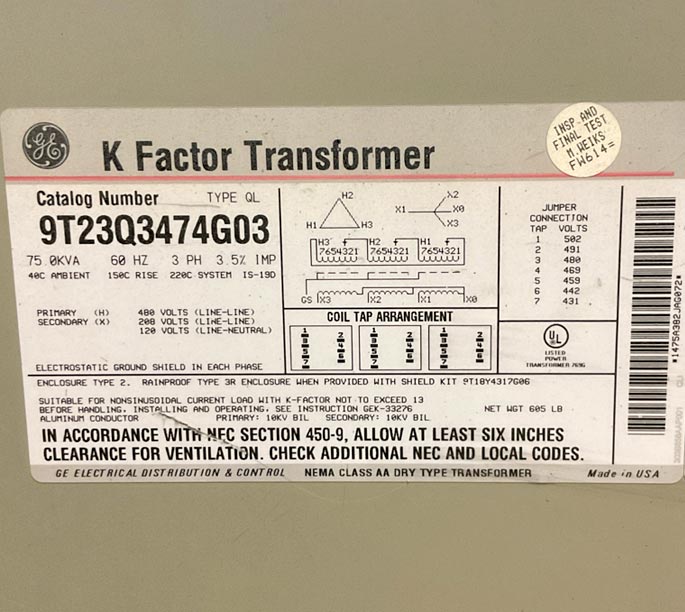
The First Thing I Ask For Is a Picture of the Nameplate
When someone calls me and says, “Kevin, I bought a CNC machine, and I need you to get power to it,” one of my first responses is usually:
Send me a clear picture of the electrical nameplate.That little plate can change the entire conversation.
I want to know the machine’s required voltage. Is it single-phase or 3-phase? What are its electrical ratings? Does the manufacturer specify particular circuit or protection requirements? Does the equipment include its own transformer or electrical cabinet?
Then I want to know what electrical system is available in the building. Those are two separate questions:
- The machine tells us what it wants.
- The building tells us what we have.
Our job is figuring out how to properly bring those two together.
I've Seen Businesses Buy the Machine Before Checking the Power
This is something I’ve personally run into more than once. A business owner finds a machine that is perfect for their operation. Maybe it’s a CNC mill, lathe, laser, large compressor, fabrication machine, or another piece of production equipment. They negotiate the price, arrange transportation, hire a rigging company, and get thousands of pounds of machinery positioned exactly where they want it.
Then someone calls the electrician. That’s when I start looking around. The machine may require 480V 3-phase, but the available distribution in that part of the building is 208V. Maybe the voltage is correct, but the panel doesn’t have the capacity we’re looking for. Maybe there’s no practical electrical path from the distribution equipment to the machine. Maybe the machine requires a disconnect that wasn’t planned for.
Now the machine is sitting there waiting. Employees are waiting. Production is waiting. And every day that machine isn’t running may be costing the business money. That’s why I always tell customers: call us before the machine gets delivered whenever possible.
- Let me see what you're buying.
- Let me see where you want to put it.
- Let me look at the electrical system.
We may be able to identify the entire electrical scope before the delivery truck ever leaves the seller.
CNC Machines Are Not All Electrically the Same
The term CNC machine covers a huge range of equipment.
A smaller CNC router and a large machining center can have completely different electrical requirements. The same applies to CNC mills, lathes, plasma tables, laser equipment, and other computer-controlled machinery.
That’s why I don’t like broad statements such as, “CNC machines use 3-phase.”
Many do. But we wire the machine that’s actually sitting in front of us, not the category it belongs to.
We verify the manufacturer’s electrical specifications and design the electrical supply around the actual equipment.
3-Phase Machinery Power
A lot of the commercial machinery we encounter uses 3-phase power, especially equipment with larger motors and higher electrical demands. Depending on the building, we may encounter 120/208V 3-phase systems, 277/480V 3-phase systems, older 120/240V 3-phase delta systems, and other configurations.
This is another place where I’ve seen assumptions cause problems. Someone says: “We’re good. The building has three-phase.
” My next question is: What voltage and amperage?
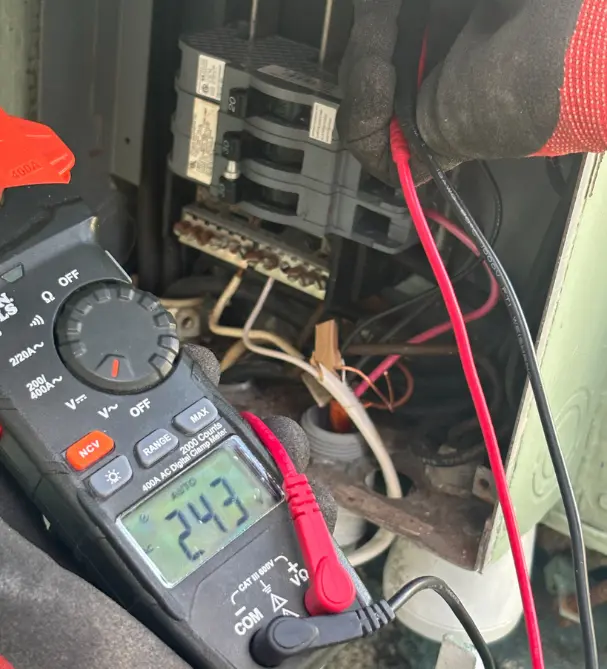
Three-phase describes the electrical system configuration. It does not automatically mean that the building’s voltage matches the machine.
A 480V machine and a 208V building don’t suddenly become compatible because they’re both 3-phase. That’s when we start looking at what options are available.
When the Building Doesn't Have the Voltage the Machine Needs
A voltage mismatch doesn’t necessarily mean the equipment can’t be installed. Depending on the machinery and existing electrical system, a properly selected transformer may provide a solution. There can also be situations where the building’s electrical distribution system needs to be modified or expanded.
But a transformer isn’t something I want someone selecting simply because they found one online that says “208 to 480.”
We need to understand the actual load, transformer rating, primary and secondary requirements, conductors, overcurrent protection, grounding and bonding, disconnecting means, location, ventilation, and the rest of the installation.
The transformer becomes part of the electrical system supplying an expensive piece of machinery. It needs to be designed like one.
Phase Rotation Can Matter
This is particularly important with 3-phase motors and machinery. The phase sequence can affect motor rotation. Depending on the machine, incorrect phase rotation could result in motors or pumps operating in the wrong direction or prevent proper startup.
That’s why, on equipment where rotation matters, it needs to be verified as part of startup in coordination with the equipment manufacturer, technician, or installer as appropriate.
I don’t want to hear: “We energized it, so we’re done.” I want to know that we’re providing the electrical characteristics the equipment is designed to receive.
Dedicated Machinery Circuits
Commercial machinery commonly requires a dedicated power supply and electrical supply.
Depending on the machine, that might involve a new breaker, feeder or branch circuit, conduit, conductors, disconnect, receptacle, transformer, junction box, or direct equipment connection.
Larger machinery can also require substantial conductor sizes and raceways. And here’s something business owners sometimes don’t realize until we’re standing in the electrical room:
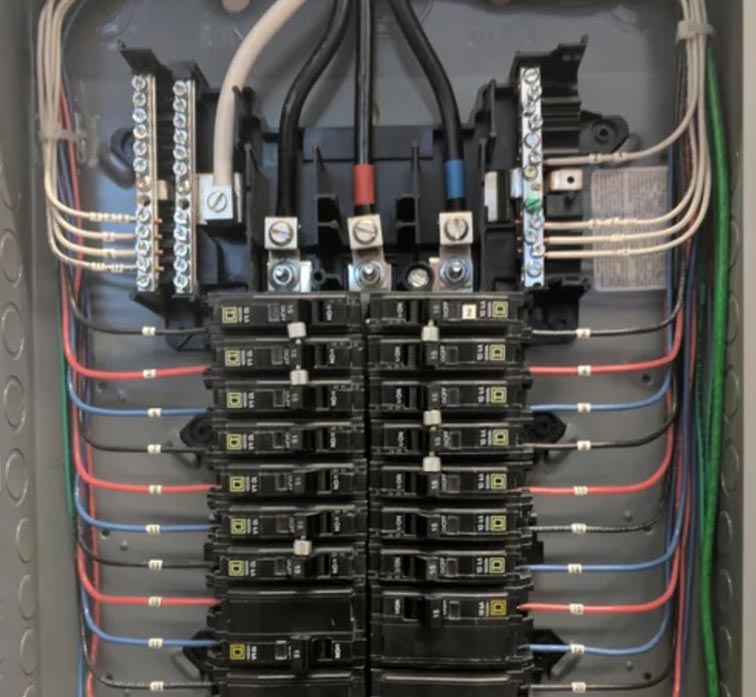
Important Distinction: Having an empty breaker space doesn’t mean you have enough power. I can open a panel and see six empty spaces. That tells me we may have physical space for additional breakers.
It doesn’t tell me whether the electrical service, feeder, transformer, or panel has enough available capacity for the machinery being added.
For significant equipment additions, we may need to evaluate the building’s electrical loads before deciding where that machine should be supplied.
Disconnecting Means for Commercial Machinery
Many pieces of machinery require a means of disconnecting the equipment from its electrical supply. Depending on the equipment and installation, that could involve a safety switch, fused disconnect, circuit breaker, plug-and-receptacle connection, or another approved method.
The disconnect needs to be properly selected for the electrical system and equipment. It also needs to be installed where it can actually serve its purpose.
When somebody is servicing a machine, they need an appropriate means to isolate electrical power according to the equipment and installation requirements. That’s something we consider during planning rather than treating the disconnect as an afterthought.
Used Machinery Can Create Some Interesting Electrical Problems
Used machinery is an area where I pay particularly close attention.
You might find an incredible deal on a machine that came out of a manufacturing plant somewhere else in the country.
But remember: That machine was selected for somebody else’s building.
Their building may have had 480V 3-phase power. Yours may have 208V. Their electrical distribution may have been located 20 feet from the machine. Yours might be 200 feet away. Their facility may have had plenty of available capacity. Yours might already be heavily loaded. The purchase price of the machine is only one part of the project.
Before buying used commercial machinery, ensure that it has a UL listing and the frequency is set to the US, which is 60 Hz, while Europe uses 50 Hz. This matters big time. The big difference between 50 Hz and 60 Hz comes down to operating speed, size, and efficiency, driven by how many times the alternating current (AC) changes direction per second. Those 10 extra cycles per second impact equipment and power grids.
I strongly recommend understanding what it will cost to power it in the building where you intend to use it.
Machine Relocation & Shop Reconfiguration
We also work with businesses relocating machinery inside existing facilities.
This happens all the time:
- A company adds another production line.
- A machine moves to create more floor space.
- A warehouse becomes a fabrication area.
- A shop adds CNC equipment.
- Manufacturing expands into the neighboring unit.
From an electrical standpoint, moving the machine means we need to look at the new location as though we’re planning the equipment again:
- Where is the nearest appropriate electrical distribution?
- Can the existing circuit be relocated or extended appropriately?
- Does the new layout interfere with required working clearances or equipment access?
- Do we need new conduit, disconnects, supports, or feeders?
I’ve seen machinery layouts change halfway through projects, and that’s why communication between the electrician, equipment installer, rigging company, and business owner is so important.
Protecting CNC & Electronic Machinery From Electrical Surges
Modern CNC and production machinery can contain sophisticated electronic controls, drives, circuit boards, computers, sensors, automation, and communication equipment.
That’s another reason I like having a conversation about surge protection when we’re installing expensive commercial machinery.
Here in Florida, lightning and utility disturbances are realities we deal with regularly. But lightning isn’t the only source of electrical transients. Electrical systems can experience disturbances from switching events and equipment operation as well.
Depending on the facility and machinery, we may recommend a layered surge-protection strategy, including surge protection at the service or distribution equipment and additional protection closer to important equipment where appropriate.
For commercial surge protection, DITEK is one of the manufacturers we trust and use.
When somebody spends $50,000, $100,000, or considerably more on production equipment, protecting the electrical system supporting that investment deserves to be part of the conversation.
No surge protective device can guarantee that equipment will never be damaged, but properly selected surge protection can provide another layer of defense against damaging transient overvoltage events.
Troubleshooting Machinery Power Problems
Sometimes we’re not installing a new machine at all. We’re called because a machine that has operated for years suddenly isn’t working properly.
That’s when the troubleshooting side of commercial electrical work takes over.
I’m looking at whether the machine is actually receiving the correct voltage:
- Are all phases present?
- Is there a voltage imbalance?
- Did a breaker trip?
- Did a fuse open?
- Is there a damaged disconnect?
- Is there an overheated termination?
- Is there an issue with the feeder?
And just like I’ve said about other electrical troubleshooting: finding something tripped isn’t necessarily finding the problem. Something caused it.
If I reset a breaker and the machine starts running again, I still want to understand why that breaker opened in the first place.
The problem may ultimately be inside the machinery, in which case the equipment technician needs to take over. But first we can determine whether the power supply and electrical system feeding that machine are doing what they’re supposed to do.
Planning a New Machine Shop or Manufacturing Facility
If you’re building a machine shop, fabrication facility, manufacturing operation, or production facility, this is where getting us involved early can save a tremendous amount of rework:
- Give us an equipment schedule.
- Tell us where every major machine is going.
- Provide the electrical specifications for the CNC machines, welders, compressors, conveyors, lifts, ovens, process equipment, and other machinery.
Then we can start looking at the building as an electrical system, incorporating automation rather than installing one circuit at a time.
We can plan distribution panels, transformers, feeders, machinery circuits, disconnects, conduit routes, receptacles, surge protection, and future capacity.
I’ve always preferred planning for what the business is going to become, not simply wiring for what happens to be sitting on the floor today.
Machinery Power & CNC Electrical Hookup FAQs
What information does an electrician need before connecting a CNC machine?
The best starting point is a clear photograph of the machine’s electrical nameplate and the manufacturer’s electrical specifications. We need to determine the required voltage, phase, electrical load, and other equipment requirements. We then compare those requirements with the electrical system available at the property.
Can Pinellas County Electric connect 3-phase CNC machinery?
Yes. Pinellas County Electric installs electrical power for CNC machines and other commercial equipment requiring 3-phase service. Depending on the installation, the work may include breakers, feeders, conduit, conductors, transformers, disconnects, grounding, and electrical distribution modifications.
What if my CNC machine requires 480V but my building only has 208V?
A transformer may be an option depending on the machine and existing electrical system. The transformer and associated electrical equipment must be properly sized for the load and installation. We evaluate the machinery and building before recommending a solution.
Do I need an electrician before buying a used CNC machine?
I strongly recommend having the electrical requirements evaluated before finalizing the installation whenever possible. A used machine may have come from a facility with a completely different voltage, electrical capacity, and distribution system. Understanding the electrical installation cost beforehand can prevent an expensive surprise after delivery.
Why does phase rotation matter on 3-phase machinery?
Changing the phase sequence can change the direction of rotation of certain 3-phase motors. Depending on the machinery, incorrect rotation can affect pumps, motors, conveyors, or other components. Where applicable, proper phase sequence and equipment operation should be verified during startup according to the manufacturer’s requirements.
Service Areas
- Pinellas County Electric provides machinery power and CNC electrical hookup services throughout Clearwater
- Clearwater Beach
- St. Petersburg
- Largo
- Pinellas Park
- Safety Harbor
- Dunedin
- Palm Harbor
- Tarpon Springs
- Seminole
- Belleair
- Belleair Beach
- Indian Rocks Beach
- Indian Shores
- Madeira Beach
- Redington Beach
- Redington Shores
- North Redington Beach
- Treasure Island
- Gulfport
- Oldsmar
- surrounding areas throughout Pinellas County, Florida.
Whether you’re installing a CNC machine in Clearwater, expanding a fabrication shop in Largo, relocating production equipment in St. Petersburg, or building a manufacturing operation in Pinellas Park, we can evaluate the machinery and the electrical system required to support it.
Bought a Machine? Call Me Before the Truck Shows Up.
If there’s one thing I want business owners to remember from this page, it’s this:
Don’t make the electrical hookup the last part of your machinery purchase.
Before you buy or relocate the machine, send us the electrical specifications. Tell us where it’s going. Let us look at the electrical system that’s going to feed it.
I’ve seen what happens when the machine arrives first and everybody starts asking electrical questions afterward. Sometimes the solution is simple. Sometimes it involves a transformer, new distribution equipment, hundreds of feet of conduit and conductors, or an electrical service upgrade nobody had included in the original budget.
At Pinellas County Electric – The Panel Pros™, our goal isn’t simply to make the machine turn on. We want to understand the equipment, understand the building, and build the electrical connection correctly for the operation you’re trying to run.
Pinellas County Electric – The Panel Pros™ Machinery Power & CNC Electrical Hookup Clearwater & Pinellas County, Florida 727-269-1982