Commercial Kitchen Electrical Services in Pinellas County, FL
Key Takeaways
- Commercial kitchen equipment is essential for efficient food preparation, cooking, and storage in restaurants and food service businesses.
- Investing in high-quality equipment improves productivity, food safety, and consistency in commercial kitchens.
- Common types of commercial kitchen equipment include ovens, ranges, refrigerators, freezers, dishwashers, and food prep tools.
- Choosing the right equipment depends on menu requirements, kitchen size, and budget considerations.
- Regular maintenance and proper cleaning extend the lifespan of commercial kitchen equipment and ensure compliance with health regulations.
- Energy-efficient equipment can reduce operational costs and support sustainability goals in the food service industry.
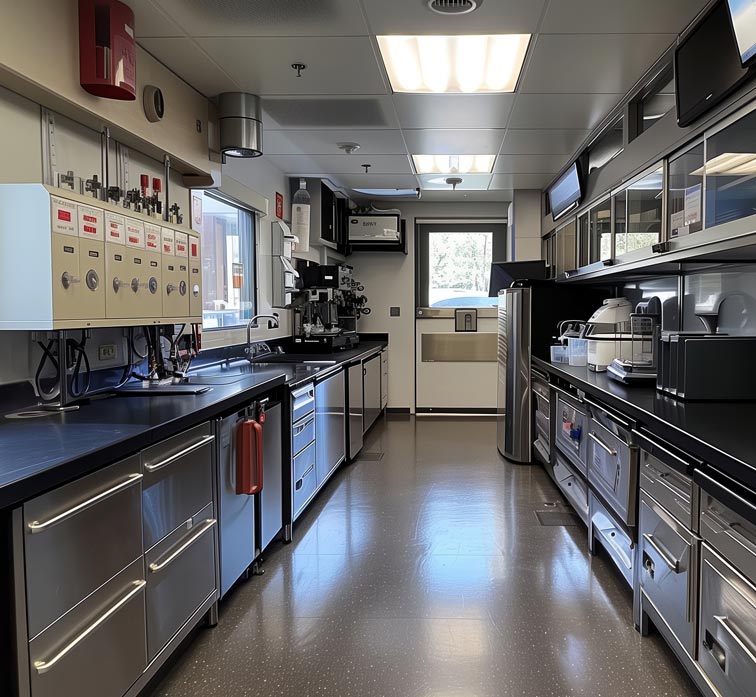
A commercial kitchen is one of those places where you really begin to see how many different electrical systems and supplies have to work together. When most people walk into a restaurant kitchen, they see ovens, fryers, refrigerators, freezers, exhaust hoods, dishwashers, steamers, mixers, and food-preparation equipment.
When I walk into that same kitchen as an electrician, I’m looking at something completely different. I’m looking at dedicated circuits, 3-phase equipment, disconnects, twist-lock receptacles, GFCI protection, lighting controls, exhaust fans, make-up air, fire-suppression interfaces, contactors, control wiring, and the electrical distribution system feeding everything.
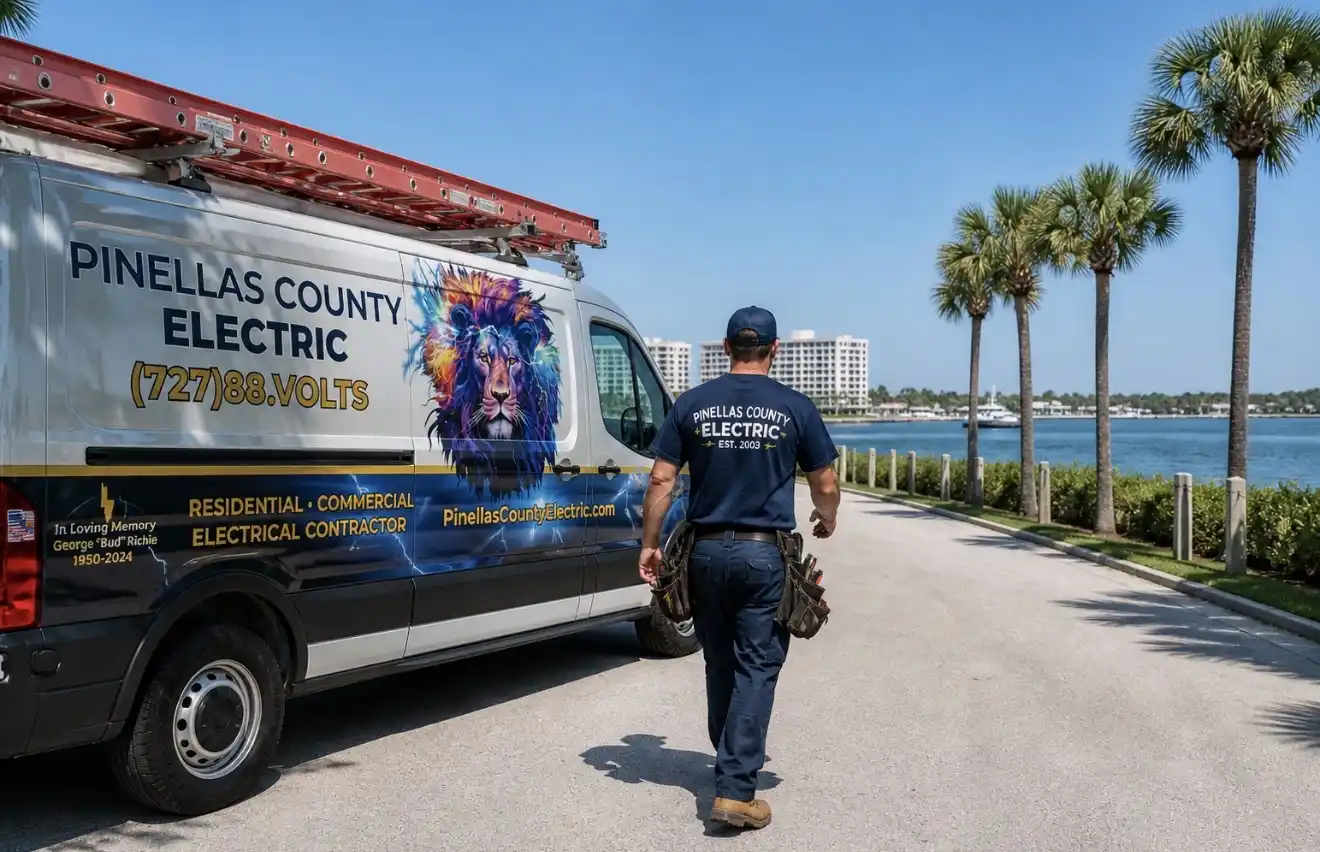
At Pinellas County Electric, we provide commercial kitchen electrical services throughout Clearwater, St. Petersburg, Largo, Pinellas Park, and surrounding areas of Pinellas County. We work with restaurant owners, commercial property owners, general contractors, kitchen-equipment installers, HVAC contractors, and fire-suppression contractors on new kitchens, restaurant renovations, equipment replacements, troubleshooting, and electrical upgrades.
After years of working inside commercial kitchens, I’ve learned that the electrical system needs to be planned around how the kitchen actually operates. It isn’t enough to simply get power to every piece of equipment. You have to understand what needs to stay on, what needs to shut down during an emergency, what equipment requires 3-phase power, and how all of those systems interact.
Commercial Kitchen Electrical Services by Pinellas County Electric:
- Multi-Voltage & 3-Phase Wiring: Supports 120V, 208V, 240V, and 480V single-phase and 3-phase heavy-duty kitchen appliances.
- Dedicated Circuits & Outlets: Installs dedicated lines, safety disconnects, and specialized commercial-grade locking receptacles.
- Fire-Suppression System Integration: Connects equipment to ANSUL systems to automatically shut down cooking power and make-up air while managing exhaust during emergencies.
- Advanced Lighting Controls: Runs line-voltage power and low-voltage control wiring for integrated kitchen lighting systems.
- Local Service Coverage: Provides full-service commercial kitchen electrical installations and upgrades across Clearwater and Pinellas County, FL.
When I Walk Into a Commercial Kitchen, I'm Looking at the Whole System
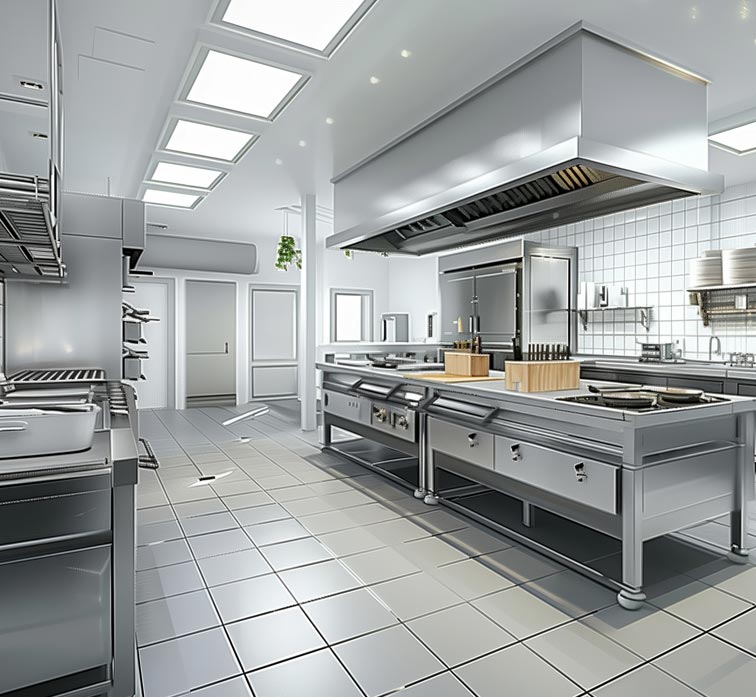
One thing commercial work has taught me is that you can’t look at each piece of kitchen equipment as though it exists by itself.
A restaurant owner might tell me, “Kevin, I need power for this oven.” That’s where the conversation starts, but that’s not necessarily where my inspection ends.
I’m looking at the nameplate on that oven. I’m looking at the panel supplying it. I want to know the voltage and whether it’s single-phase or 3-phase. I want to know what overcurrent protection it requires and whether it needs a disconnect or a particular receptacle. Then I’m looking around the kitchen spot.
- Is this equipment underneath the hood?
- Is it part of the cooking line or the coldline?
- Does it need to shut down when the fire-suppression system activates?
- What else is connected to that system?
- Where is the exhaust fan?
- Where is the make-up air?
- How are the contactors controlled?
In a commercial kitchen, everything starts becoming connected. That’s why experience with the entire kitchen matters.
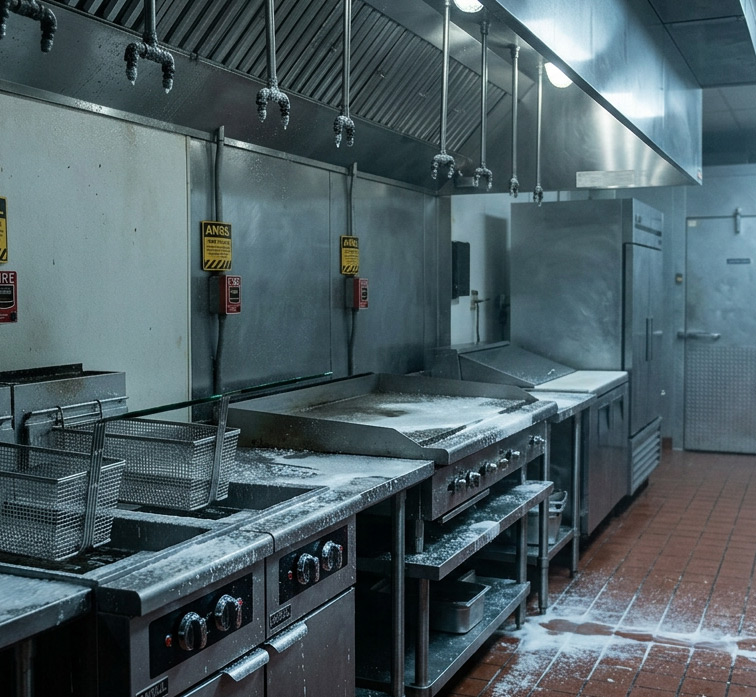
Understanding the ANSUL Fire-Suppression System
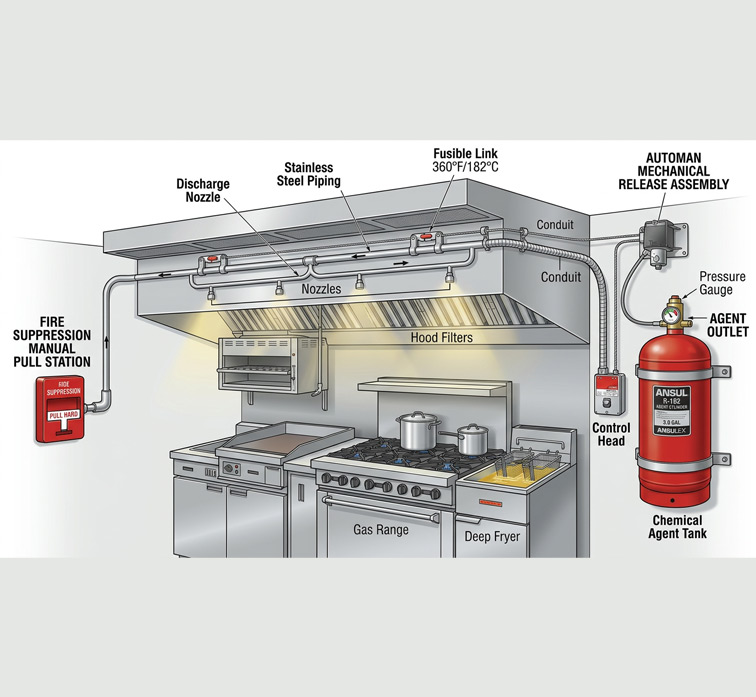
One of the most important systems we work around in a commercial kitchen is the ANSUL fire-suppression system. ANSUL is a well-known manufacturer of commercial kitchen fire-suppression systems, although the exact equipment and approved sequence can vary by installation.
The easiest way I explain it to a restaurant owner is that the fire-suppression system isn’t just there to discharge an extinguishing agent over the cooking equipment. It can also initiate an electrical sequence of operations designed around the emergency.
When that system activates, designated electrical equipment beneath the hood may need to shut down. The make-up air may need to shut down, while the exhaust system is maintained or activated according to the approved design.
Why?
Because during a fire, we don’t want the ventilation system continuing to introduce fresh air in a way that can contribute to the fire. At the same time, the hood exhaust plays an important role in managing heat, smoke, and combustion products.
Exactly what shuts down or remains operating is determined by the listed hood/fire-suppression system, applicable code requirements, approved plans, and the equipment involved. We don’t guess at the required sequence.
Normally Open & Normally Closed Contacts
This is where the electrical side becomes particularly interesting.Commercial fire-suppression systems can provide normally open and normally closed contacts that allow us to interface the suppression system with other electrical equipment.
Under normal kitchen operation, those contacts remain in their normal state and the restaurant operates as designed. When the fire-suppression system activates, those contacts change state.
That change can be used as a control signal to operate contactors, relays, shunt-trip devices, exhaust controls, make-up-air controls, alarms, or other required equipment depending on the design.
In other words, instead of trying to physically interrupt every large electrical load directly through the fire-suppression microswitch, we can use the control signal to tell properly selected electrical equipment what needs to happen.
That’s an important distinction. The suppression system tells the electrical system: Something happened. Now perform the emergency sequence.
What Happens When the ANSUL System Activates?
Depending on the approved system design, activation can happen automatically through the fire-suppression detection system or manually through the system’s pull station.
Once activated, the system releases the extinguishing agent and the electrical interlocks perform their required functions.
That may include disconnecting electrical power to designated cooking equipment beneath the hood, shutting down make-up air, and maintaining or starting the exhaust system, along with other required actions.
The exact sequence matters.
This is why I don’t like seeing people randomly modifying commercial kitchen wiring because they’re moving a fryer six feet down the wall or replacing an appliance. That appliance may be part of a much larger safety system.
You’re not always moving just a circuit. You may be changing part of the kitchen’s emergency shutdown system.
I've Seen How Quickly Restaurant Equipment Gets Moved Around
Restaurant kitchens change constantly. Owners replace equipment. A new chef wants the cooking line arranged differently. An old fryer gets replaced. Someone buys a used piece of equipment because they got a great deal on it. A refrigerator moves. Another oven gets added.
I’ve walked into plenty of kitchens where the electrical system, along with the utensils and tools used to maintain and alter it, tells the history of every change that has been made over the years. That’s when I start asking questions:
- Is this still the correct circuit?
- Does the new machine require the same voltage?
- Is it still properly connected to the required emergency shutdown?
- Is that receptacle actually rated for the equipment?
- Has someone bypassed something because they couldn't figure out why the machine wouldn't turn on?
Commercial kitchens are one place where “just make it work” can become a dangerous approach very quickly.I want to understand how the kitchen was intended to operate before we start changing things.
3-Phase Commercial Kitchen Equipment
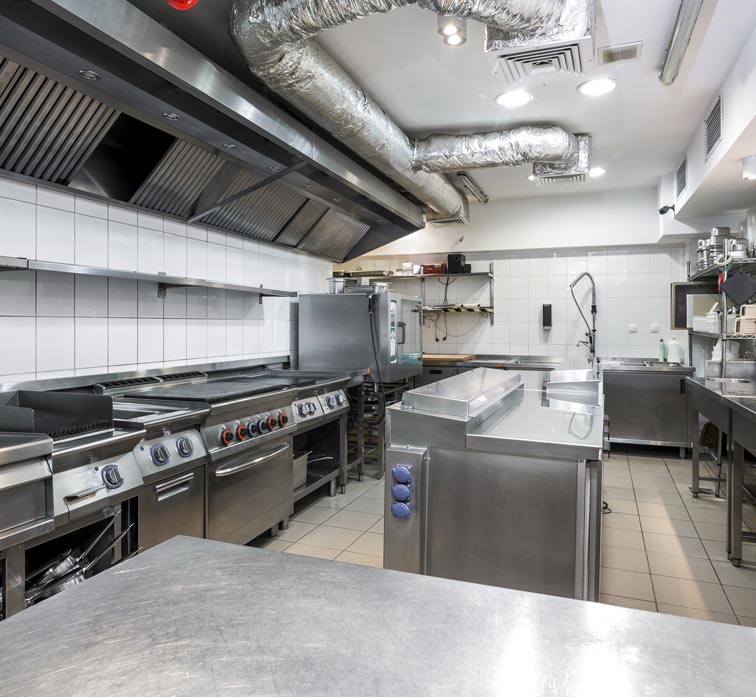
Commercial kitchens can contain equipment requiring significantly more power than what you would normally find in a home.
Depending on the restaurant and building, we may encounter 3-phase ovens, steamers, dishwashers, large mixers, food-processing machines, refrigeration equipment, exhaust systems, and other commercial appliances.
This is where checking the equipment nameplate becomes critical.
I want to know the voltage, phase, amperage, and manufacturer’s electrical requirements before we connect anything, using the appropriate tools.
A piece of equipment being 3-phase doesn’t automatically tell me that it’s compatible with the building. We still need to know whether we’re dealing with 208V, 240V, 480V, or another system.
And if that equipment has motors, compressors, or other phase-sensitive components, there may also be additional startup considerations.
We verify first, especially for coldline applications. Then we energize.
Commercial Locking Receptacles Aren't Ordinary Outlets
Another thing restaurant owners sometimes don’t realize until they’re pricing a project is how different commercial equipment connections can be from ordinary receptacles.
Some commercial equipment uses locking-type receptacles and plugs, often referred to generally as twist-lock or locking connections. The exact configuration depends on the voltage, amperage, number of conductors, phase, and equipment requirements.
These are not the same receptacles you’d find around a house. A heavy-duty commercial locking receptacle can cost considerably more than a traditional general-purpose receptacle, particularly as amperage and specialty configurations increase. The plug and receptacle also have to be correctly matched.
I’ve seen situations where somebody sees what looks like the right receptacle and assumes the equipment will work. That’s not how we determine compatibility. The configuration of the receptacle tells us something about the circuit, but the equipment nameplate tells us what the machine actually requires. We start with the equipment.
Dedicated Circuits for Commercial Kitchen Equipment
Many pieces of commercial kitchen equipment require their own properly designed circuits.
That can include ovens, steamers, dishwashers, refrigeration equipment, freezers, ice machines, warming equipment, mixers, food processors, exhaust equipment, and other appliances.
When we’re installing a circuit, we’re considering more than just the breaker.
We’re looking at voltage, phase, conductor size, overcurrent protection, disconnecting requirements, receptacle configuration, grounding, GFCI requirements where applicable, and manufacturer specifications.
We’re also looking at the existing electrical panel.
An empty breaker space doesn’t automatically mean the building has enough capacity to add another major kitchen appliance.
That’s something I’ve learned to explain repeatedly:
Panel space and electrical capacity are two different things.
Commercial Kitchen Lighting Controls
Lighting is another part of commercial kitchen electrical work that can easily be overlooked.
Commercial kitchens may have general lighting, food-preparation lighting, hood lighting, storage lighting, cleaning-area lighting, walk-in cooler or freezer lighting, and other lighting zones.
Rather than simply installing switches everywhere, larger commercial facilities may benefit from a centralized lighting control system.
At Pinellas County Electric, we work with professional lighting-control products from manufacturers such as Lutron, Legrand, and Leviton, depending on the project requirements.
These systems can give a business much more control over how its lighting operates.
Line Voltage Plus Low-Voltage Lighting Controls
This is something I’d like more commercial property owners to understand when they’re building or renovating a facility.
We don’t necessarily have to control every lighting load by bringing the full line-voltage circuit to a traditional wall switch.
Depending on the lighting-control system, we can install the main line-voltage power to the lighting control equipment while also running low-voltage control wiring to switches, keypads, sensors, or other control devices.
The low-voltage controls communicate with the lighting-control system, and the panel or control equipment handles the actual lighting load.
That can give us much more flexibility.
It can also make future control strategies possible, including occupancy sensing, scheduling, different lighting zones, centralized control, and other automation depending on the system selected.
I particularly like discussing this before walls and ceilings are closed. That’s when adding control wiring is easiest.
A little planning during construction can give a business many more options later.
Troubleshooting Commercial Kitchen Electrical Problems
Restaurant electrical troubleshooting can get interesting because so many systems interact with one another. A piece of equipment isn’t working:
- Is the breaker tripped?
- Did a fuse open?
- Did the fire-suppression system activate?
- Is an interlock preventing the equipment from operating?
- Is a contactor not pulling in?
- Is there a problem with the control circuit?
- Is there a failed disconnect?
- Did somebody move equipment and reconnect it incorrectly?
Those are the questions we’re asking. I’ve learned over the years that using the right tools for the job is crucial because resetting something isn’t the same as troubleshooting it.
If a breaker trips, a contactor fails, or equipment unexpectedly loses power, I want to know why. Finding the cause is what prevents the same problem from happening again.
Planning a New Commercial Kitchen
If you’re building or renovating a commercial kitchen, get your electrician involved early:
- Give us the kitchen equipment schedule.
- Give us the hood drawings.
- Give us the electrical specifications for the appliances.
- Give us the fire-suppression information.
- Let us coordinate with the HVAC contractor, fire-suppression contractor, kitchen-equipment supplier, and general contractor.
The earlier we understand the entire kitchen, the easier it is to determine where circuits, disconnects, coldline storage requirements, receptacles, control wiring, contactors, lighting controls, and panels need to go.
I’ve seen projects where equipment arrives after the electrical rough-in and suddenly everybody discovers the appliance specifications changed.
That’s when walls start getting opened again and schedules start moving backward. Planning is almost always cheaper than reworking.
Frequently Asked Questions About Commercial Kitchen Electrical Systems
What electrical equipment must shut down when an ANSUL system activates?
The exact shutdown sequence depends on the approved hood and fire-suppression system design, equipment, and applicable requirements. Designated electrical cooking equipment beneath the hood commonly requires automatic shutdown when the suppression system activates. Ventilation equipment may also be controlled as part of the sequence. The approved system documentation should determine exactly what equipment shuts down, remains running, or starts.
Does the exhaust fan shut off when the kitchen fire-suppression system activates?
Not necessarily. Commercial kitchen fire-suppression systems are commonly designed so that required exhaust continues operating or is activated while make-up air is shut down, depending on the approved system design. This should be verified from the hood and suppression-system requirements rather than assumed.
Why does commercial kitchen equipment sometimes need 3-phase power?
Larger commercial appliances can require substantial electrical power. Three-phase electrical systems are commonly used for larger motors and commercial equipment because they can efficiently supply higher loads. The equipment nameplate identifies the voltage and phase required for the particular appliance.
Why are commercial kitchen receptacles more expensive?
Heavy-duty commercial equipment may require higher-amperage or specialty locking receptacles designed for specific voltage, amperage, and conductor configurations. These devices are more specialized than ordinary 15- or 20-amp receptacles and can cost considerably more. The receptacle and plug must be properly matched to the equipment and circuit.
Can you install low-voltage controls for commercial kitchen lighting?
Yes. Depending on the lighting-control system selected, Pinellas County Electric can install the line-voltage lighting circuits along with low-voltage control wiring for switches, sensors, keypads, and other controls. We work with commercial lighting-control products from manufacturers including Lutron, Legrand, and Leviton.
Service Areas
- Pinellas County Electric provides commercial kitchen electrical services throughout Clearwater
- Clearwater Beach
- St. Petersburg
- Largo
- Pinellas Park
- Safety Harbor
- Dunedin
- Palm Harbor
- Tarpon Springs
- Seminole
- Belleair
- Belleair Beach
- Indian Rocks Beach
- Indian Shores
- Madeira Beach
- Redington Beach
- Redington Shores
- North Redington Beach
- Treasure Island
- Gulfport
- Oldsmar
- and surrounding communities throughout Pinellas County
- Florida
Whether you’re building a restaurant in Clearwater, renovating a commercial kitchen in Largo, replacing equipment in St. Petersburg, or opening a food-production facility in Pinellas Park, we can help plan and install the electrical system supporting the operation.
Frequently Asked Questions (FAQs)
What is considered commercial kitchen equipment?
Commercial kitchen equipment includes appliances and tools designed for use in restaurants, cafeterias, and other food service establishments. Examples are ovens, grills, fryers, refrigerators, freezers, mixers, and dishwashers.
How do I choose the right commercial kitchen equipment?
Consider your menu, kitchen layout, volume of service, and budget. Prioritize equipment that meets your specific cooking and storage needs while ensuring energy efficiency and compliance with safety standards.
Why is regular maintenance important for commercial kitchen equipment?
Routine maintenance prevents breakdowns, extends equipment lifespan, and ensures food safety by keeping appliances clean and functioning properly.
Are there energy-efficient options for commercial kitchen equipment?
Yes, many manufacturers offer energy-efficient models that help reduce utility costs and environmental impact. Look for ENERGY STAR certified appliances.
How often should commercial kitchen equipment be cleaned?
Cleaning frequency depends on the type of equipment and usage, but most items should be cleaned daily, with deep cleaning scheduled weekly or monthly as recommended by the manufacturer.
Building or Renovating a Commercial Kitchen? Get Us Involved Early.
If I could give a restaurant owner one piece of advice, it would be this: don’t wait until the kitchen spot where equipment will be placed is fully realized to start thinking about the electrical system.
Send us the equipment schedule, supplies, and nameplates. Let us see the hood and fire-suppression plans. Tell us how you want the kitchen, utensils, and lighting to operate.
At Pinellas County Electric – The Panel Pros™, we look beyond individual circuits. We want to understand how the kitchen operates as a complete system, from the electrical panel and 3-phase equipment to the ANSUL interface, contactors, exhaust and make-up air, dedicated equipment circuits, locking receptacles, and lighting-control system.
That’s the difference between simply wiring a kitchen and understanding how a commercial kitchen needs to operate.
- Pinellas County Electric – The Panel Pros™
- Commercial Kitchen Electrical Services
- Clearwater & Pinellas County, Florida