
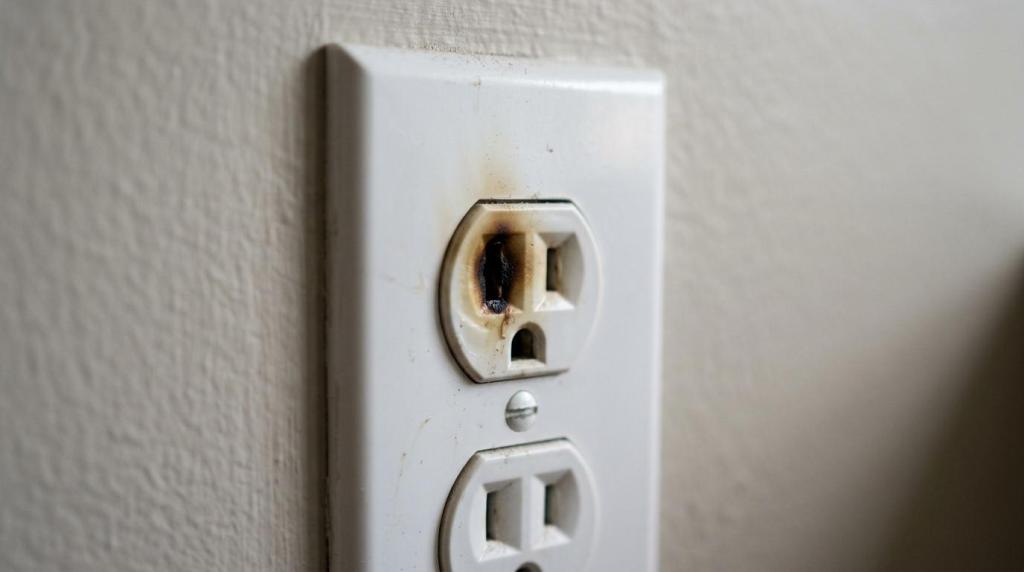
Clearwater homeowners usually notice the same few electrical symptoms first: a breaker that keeps tripping, a warm outlet, lights that flicker when the AC starts, or a plug that suddenly stops working. The hard part is knowing whether the fix is a single outlet repair or a closer look at the electrical panel.
Key Takeaways
- Electrical panel problems usually affect multiple circuits or show up when larger loads like an air conditioner or refrigerator start, while outlet problems are often isolated to one receptacle, one wall, or one appliance.
- A warm outlet, hot faceplate, burning smell, discoloration, crackling, or repeated breaker trips should be treated as safety warnings. The Consumer Product Safety Commission advises stopping use and having a licensed electrician inspect and correct the problem.
- If one outlet is warm or one breaker trips with one appliance, the issue may be local wiring, a bad receptacle, or overload on that branch circuit. If several rooms flicker, multiple breakers trip, or the panel feels hot or buzzes, a broader panel inspection is warranted.
- Never replace a tripping breaker with a higher-amp fuse or circuit breaker to “solve” the problem, as improper fuses can defeat circuit protection and increase fire risk.
- In Pinellas County, many electrical system repairs, replacements, and service-panel changes require permits or inspections, especially when the work is regulated by technical codes or exceeds local thresholds.
That distinction matters because the repair path, safety risk, and permit needs are not the same, especially if outdated systems are involved. In older Clearwater homes, where modern loads now include central AC, kitchen appliances, EV chargers, and electronics, a local outlet symptom can also be the first clue that the panel is undersized or aging.
How do outlet problems differ from electrical panel problems?
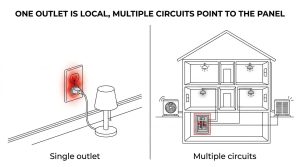
Single-outlet failures usually mean a receptacle or branch-circuit issue, while repeated trips across rooms often indicate panel stress. In Clearwater homes with central AC, scope is the fastest clue: one device suggests a local fault; multiple circuits suggest a service box or capacity problem.
An outlet problem is usually localized. You may have one dead receptacle, one loose plug, one scorched faceplate, or one GFCI that keeps tripping in a kitchen, bathroom, or garage. Those symptoms often trace back to the receptacle itself, a loose connection, damaged branch wiring, or a problem upstream on that same circuit.
A panel problem tends to be broader. In a Zinsco panel, circuit breakers may trip in different rooms, breakers fail to trip, lights may dim when the compressor starts, or the service box may buzz, smell burnt, or feel warm, potentially indicating a power outage due to voltage issues. That points away from a single outlet and toward breaker failure, poor connections, load imbalance, aging equipment, or insufficient service capacity.
Side-by-side comparison of isolated outlet warning signs versus whole-home electrical panel warning signs.
“Pinellas County Electric flags persistent flickering, breaker trips, crackling, and burning smells from the service box as reasons to inspect the panel.”
One common mistake is treating a breaker trip as an inconvenience instead of a diagnostic clue. The CPSC advises against installing a higher-amp fuse or circuit breaker when a particular receptacle or switch causes trips, as it could violate safety standards. If the protection device is reacting, the real job is to find out why.
Which warning signs mean you should shut power off right away?
Hot faceplates, burning smells, and crackling from a receptacle or panel are urgent warning signs. CPSC guidance treats unusually warm outlets and uncomfortable-to-touch faceplates as possible fire hazards, not minor nuisances.
If an outlet is hot, smells burnt, or shows brown or black discoloration, stop using it immediately. Unplug what you safely can, and if you know the correct breaker, switch that circuit off. The same goes for a panel that buzzes, crackles, or smells hot.
A brief flicker from a loose bulb is not in the same category as repeated flicker plus heat or odor. If the symptom includes heat, smell, sound, or visible damage, skip the guessing and get qualified help quickly. That is especially true after storms, roof leaks, or any water intrusion near the panel or receptacles.
What are the most common signs of a local outlet problem in Clearwater homes?
Local outlet problems usually stay local. In Clearwater kitchens, bathrooms, garages, and older bedrooms, the best clue is that one receptacle or one small group of outlets misbehaves while the rest of the house seems normal.
After confirming the symptom is isolated, look for these outlet-level signs:
- One receptacle is dead, but nearby lights and other rooms still have power.
- A GFCI trips only when a specific appliance is used.
- The faceplate feels warm, loose, or slightly soft.
- Plug blades fit poorly or fall out of the outlet.
- You see discoloration, hear crackling, or notice a spark at one location.
A local outlet issue can still be serious. A “dead outlet” may actually be downstream from a failed connection or caused by a power outage, and a warm receptacle often points to loose wiring or overload. In moisture-prone spaces, protection matters even more because outlets near water need to cut power instantly when a fault appears.
What should you do when a breaker keeps tripping?
A breaker that keeps tripping is doing its job. In a Square D or Eaton panel, repeated trips usually mean overload, short circuit, ground fault, or a failing breaker, not a breaker that needs a stronger replacement.
Start with the pattern. If the same breaker trips only when one microwave, toaster oven, or portable AC runs, unplug that load and reset the breaker once. If the breaker holds with the appliance removed, the issue may be appliance-related or a branch circuit that is overloaded.
Quote card reading, ‘A breaker that keeps tripping is doing its job.’
Next, identify what else is on that circuit. Many Clearwater homeowners are surprised to learn that one bedroom, hallway, and exterior outlet may share a single 15-amp or 20-amp circuit breaker. If several everyday devices now live on a circuit that was lightly used decades ago, nuisance trips may actually be load warnings, indicating that the setup could be outdated.
If the breaker trips again after one reset, stop resetting it repeatedly. That is a useful misconception to retire. Repeated resets do not ‘teach’ a breaker to stay on; they can let heat build while the root fault remains, especially in older Zinsco panels known for manufacturing defects.
How can you tell whether flickering lights point to the panel or just one circuit?
Flickering in one lamp often means a fixture or bulb issue, while house-wide flicker when the AC or refrigerator starts points more strongly to panel or service capacity problems. Pattern matters more than brightness alone.
If only one fixture flickers, check the bulb, dimmer compatibility, and the fixture connection. One room flickers with one breaker involved, the branch circuit may have a loose neutral or a failing device somewhere upstream.
If lights in several rooms dip when the air conditioner kicks on, that is different. Large motor loads create startup demand, and weak connections or limited panel capacity can make the whole system show strain. That does not automatically mean a full replacement is needed, but it does move the problem closer to the panel or service equipment.
“Pinellas County Electric lists flickering when the air conditioner or refrigerator starts as a practical sign that the system may be struggling with the load.”
A useful pro tip is to note exactly when the flicker happens, then have an electrician inspect the issue to ensure it is resolved safely. If the event matches the same load every time, that timing gives a licensed electrician a much faster path to the right circuit, breaker, and panel inspection points.
What should you do if an outlet feels warm, smells burnt, or looks discolored?
A warm or burnt outlet should be taken out of service immediately. CPSC guidance and standard electrical safety practice treat heat, odor, and discoloration as signs of an unsafe wiring condition.
First, unplug the device if that can be done safely without forcing anything. Second, stop using that receptacle and the paired plug on the same device. Third, switch off the breaker if you can identify the correct circuit confidently.
Do not test the outlet with another appliance to “see if it still works.” That is a common but risky move. An outlet can still energize while the internal connection is loose, arcing, or overheating.
Pinellas County Electric notes that a warm outlet often signals loose wiring or an overloaded circuit. That is why the symptom matters even if the plug still powers a lamp or phone charger.
How can Clearwater homeowners check whether an overloaded circuit is the real issue?
Overloaded circuits have a measurable pattern. On a 15-amp circuit, continuous loads should generally stay around 12 amps, and on a 20-amp circuit, around 16 amps, which follows the common 80 percent planning rule.
A quick homeowner check starts with identifying what loses power when the breaker trips. Then compare the load pattern with the circuit rating and timing.
- Map the loads: Note every outlet, light, fan, and appliance that goes dead when that breaker trips.
- Watch the trigger: See whether the trip happens when one heavy load starts, or only when several medium loads run together.
- Compare the rating: A space heater, toaster oven, hair dryer, or window AC can use enough current to overload a shared 15-amp circuit.
If the breaker trips only when combined load rises, overload is likely. If it trips under modest load, or with no obvious trigger, think beyond overload. In that case, loose wiring, a failing breaker, a damaged receptacle, or a neutral issue becomes more likely.
When does an older panel need inspection or upgrade instead of another outlet repair?
Older panels need professional attention when symptoms are repeated, multi-circuit, or tied to obsolete equipment, such as outdated fuses, to ensure compliance with current safety standards. Federal Pacific and Zinsco panels deserve extra caution, especially in Clearwater and St. Petersburg homes built around lower historical power demand.
A single failed outlet or when breakers fail to trip does not automatically mean you need a panel upgrade. The case becomes stronger when several rooms flicker, breakers trip often, the panel is fully packed, large loads have been added, or the panel shows heat, corrosion, buzzing, or a burning odor.
That same logic applies when life changes the electrical load. If a home is adding an EV charger, generator interlock, new HVAC equipment, or a remodel, a panel that once seemed fine may no longer have safe, practical capacity.
“Pinellas County Electric sees many older Clearwater and St. Petersburg homes that were wired for a fraction of today’s electrical use.”
There is a trade-off here. Repairing one receptacle is faster and less invasive, while a panel upgrade addresses larger safety and capacity limits. Many U.S. homes still operate on 100-amp service, but 200-amp service is a common upgrade target when major loads are added. The right choice depends on load calculations, panel condition, and future plans, not just the most recent nuisance trip.
Do permits matter for panel repairs and service changes in Pinellas County?
Yes, permits matter for panel work in Pinellas County. County guidance says permits are required for many electrical system repairs or replacements regulated by technical codes, and permit choices affect processing speed.
For homeowners, the practical point is simple: panel replacements, service changes, and many code-regulated electrical repairs are not just swap-and-go tasks. In unincorporated county areas, permits are generally required for work over $500 or when an inspection is required, and the county states that permits exist to establish minimum safety standards and safety requirements for fire and property protection.
A common misconception is that permit rules only matter for major additions. In reality, service equipment changes are one of the clearest cases where permitting and inspection are part of the safe process. Pinellas County’s residential permit information even references a dedicated new service-panel permit type, which shows how specifically the county treats this work.
Which panel brands or house conditions deserve extra caution in older Clearwater homes?
Federal Pacific and Zinsco panels deserve close attention, and so do older homes with outdated aluminum branch wiring, crowded circuit breakers, or signs of heat at the service box. These are not automatic emergencies, but they are strong inspection triggers.
Brand alone is not the whole story. Condition matters just as much. A modern panel with corrosion, improper breaker fit, double-tapped conductors, or overheating can be more urgent than an older panel that is clean, dry, and lightly loaded.
Clearwater homes near the coast also face humidity, salt exposure, and long service lives under Florida weather stress. If the panel area shows rust, staining, or evidence of water entry, the inspection should cover both electrical safety and the source of moisture.
FAQs
How can I tell if my electrical issue is an outlet problem or a panel problem?
If you notice issues isolated to a single outlet, like one outlet not working or feeling warm, it’s likely an outlet problem. However, if you experience widespread issues such as multiple outlets not working, frequent breaker trips, or flickering lights throughout your home, the problem may be with your electrical panel.
What are the signs of electrical panel problems?
Common signs include frequent breaker trips, buzzing or crackling sounds from the panel, flickering or dimming lights in multiple rooms, warm or discolored panel surfaces, and a burning smell near the panel. These symptoms indicate it’s time for professional attention and a professional inspection.
Are tripped breakers always a sign of panel issues?
Not always. A single tripped breaker can result from an overloaded circuit or a faulty appliance. However, if breakers trip repeatedly or multiple breakers trip at once, it could signal a larger issue with your electrical panel.
When should I call an electrician for an inspection?
Contact a licensed electrician if you notice persistent electrical issues, warm or discolored outlets, frequent breaker trips, or if your home is older and hasn’t had a panel upgrade in many years. Pinellas County Electric can provide a thorough inspection and recommend solutions.
Can overloaded circuits damage my electrical panel?
Yes, consistently overloaded circuits can cause excessive wear on your panel and breakers, potentially leading to dangerous conditions. Addressing overloaded circuits promptly helps protect your home and electrical system.
How often should my electrical panel be inspected?
It’s recommended to have your electrical panel inspected every 3-5 years, or sooner if you notice any warning signs. Regular inspections help catch issues early and ensure your system remains safe and reliable.
Is it necessary to upgrade my electrical panel?
If your panel is outdated, unable to handle your home’s electrical load, or shows signs of damage, an upgrade is essential for safety and efficiency. Modern panels offer better protection and can accommodate today’s electrical demands.
Who should I contact for electrical panel problems in Clearwater, FL?
For reliable service and expert inspections, contact Pinellas County Electric. Our experienced team can diagnose and resolve both outlet and panel issues, ensuring your home’s electrical system is safe and up to code.
What happens during a professional panel inspection or upgrade visit?
A proper panel visit starts with diagnosis, not assumptions, including checking for voltage issues and inspecting fuses that could indicate deeper problems, such as when breakers fail to trip. In Clearwater, a licensed electrician should inspect and connect the symptoms to the right circuit, the panel condition, and the permit path before recommending repair versus upgrade.
The visit typically begins with symptom review: which breaker trips, what flickers, what smells hot, and what major appliances were added. Then comes a hands-on look at breaker labeling, panel age, connection condition, grounding and bonding details, load distribution, and whether any obsolete or damaged components, such as a Zinsco panel, are present.
“Pinellas County Electric says most residential panel replacements can be completed within a single business day.”
That timeframe matters because many homeowners delay inspection out of fear that panel work will leave the house unusable for days. In many cases, the bigger issue is not disruption but waiting too long while heat, power outages, nuisance trips, or flicker continue to point to a system that wants attention now.


