
Key Takeaways
- Older Clearwater, FL homes often require electrical panel replacement or upgrades to meet modern safety and power demands.
- Warning signs like frequent breaker trips, flickering lights, or burning smells indicate a panel may need replacement.
- Panels over 25-30 years old are more likely to be outdated or unsafe, especially if original to the home.
- Insufficient panel capacity can cause issues when adding new appliances, remodeling, or installing EV chargers.
- Safety concerns, such as outdated fuse boxes or panels recalled for fire risks, require immediate attention.
- Pinellas County Electric recommends full panel replacement for aging, unsafe, or recalled panels, and upgrades for increased capacity or code compliance.
- Consulting a licensed electrician ensures your home’s electrical system is safe, reliable, and ready for future needs.
Older Clearwater homes often sit at an interesting crossroads. They may have character, mature neighborhoods, and solid construction, yet the electrical system can still reflect a time when households used far less power than they do today.
That is why one of the most common questions from homeowners is simple: do you need a full electrical panel replacement, or can you get by with an electrical panel upgrade?
The answer depends on safety, capacity, the condition of the existing equipment, the potential permit fees, the involvement of a utility company, and the overall cost, including the cost to replace an electrical panel, involved with the work. In some homes, the panel itself is still in good shape and the main issue is that the home needs higher amperage or a few new circuits through upgrading. In others, the panel is outdated, damaged, or no longer a safe foundation for modern electrical demands, requiring the expertise of a licensed electrician.
Electrical panel replacement vs. electrical panel upgrade in older Clearwater homes
A good first step is to separate these two terms, because they are often used as if they mean the same thing.
An electrical panel upgrade usually means increasing the service capacity or modifying the existing setup so it can support more power safely. That may involve moving from 100 amps to 150 or 200 amps, adding circuits, improving grounding, or making related service changes.
A full electrical panel replacement means the panel itself is being removed and replaced with new equipment. This is common when the existing panel is old, unreliable, damaged, or tied to known problem brands. In many cases, a service capacity increase and a full panel replacement happen together, though not always.
| Situation | Likely recommendation | Why it matters |
| Panel is in good condition but home needs one new dedicated circuit | Targeted upgrade | The system may only need added capacity in a limited area |
| Existing 100-amp service is overloaded by modern usage | Service upgrade, often to 150 or 200 amps | Older capacity may no longer match the home’s actual load |
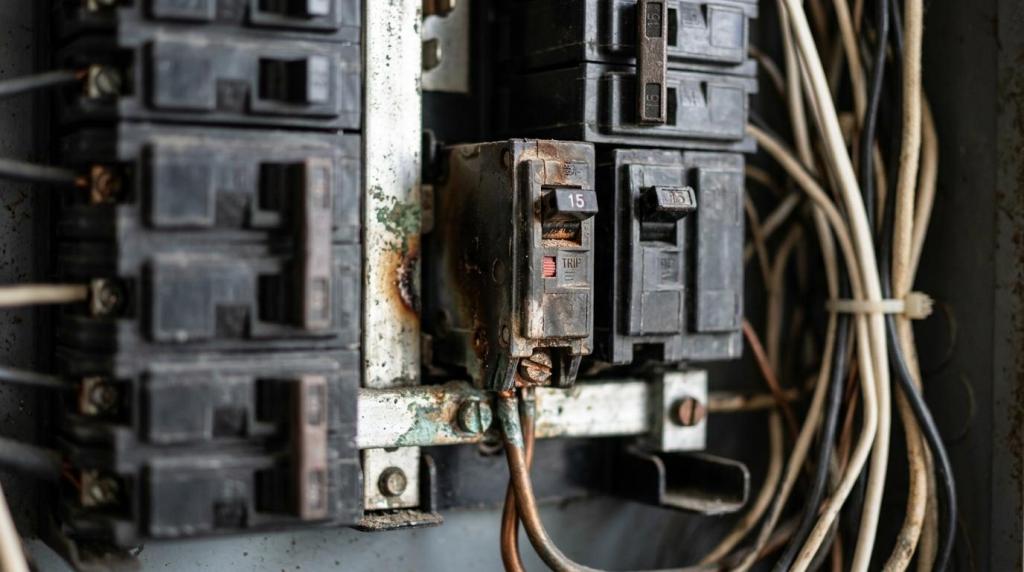
| Panel has corrosion, heat damage, or breaker reliability issues | Full panel replacement | Safety and long-term reliability come first |
| Home has outdated or problematic panel brand | Full panel replacement | Known equipment concerns make repair less appealing |
| Remodel adds major appliances, HVAC, or EV charging | Upgrade or replacement based on load calculation | New demand can push the system beyond safe limits |
For many older homes, the deciding factor is not age alone but also the cost of upgrading or deciding to replace your electrical panel. A panel can be old and still serviceable, or relatively newer and already too small for the way the home is used. What matters is whether the current equipment can safely handle the load and whether the panel remains a dependable base for future work.
Warning signs that point to electrical panel replacement or immediate evaluation
Homeowners usually notice symptoms before they know the cause, possibly even issues with the electric meter. Those symptoms should not be brushed off as normal behavior in an older house.
Repeated breaker trips, flickering lights, and warm outlets are common signs that the electrical system needs professional attention. The same goes for burning odors, crackling sounds, or visible discoloration around outlets or the panel. National fire safety guidance treats these signs seriously, and so should homeowners.
If a house is relying on power strips and extension cords in room after room, that is also a message. The issue may not be the cords themselves. It may be that the home simply does not have enough circuits or enough panel capacity for current needs.
Some warning signs are easy to miss until they become routine:
- breakers that trip often
- lights dimming when an appliance starts
- buzzing or crackling near the panel
- warm or discolored outlets
- a burning or rubber-like smell
- sparks when plugging in equipment
A panel or electric meter does not need to be smoking to be a problem. Small, repeated signs usually show up first. Catching them early creates more options and can keep a manageable fix from turning into an urgent replacement.
Electrical panel age, capacity, and outdated equipment in Clearwater homes
Many older homes in Clearwater were built around 100-amp service. That was often enough at the time. Today, many modern homes are built with 150- or 200-amp panels because everyday electrical demand is much higher.
Think about what has changed. Central air runs longer. Kitchens use more countertop appliances. Laundry rooms often include larger machines. Garages now support freezers, tools, and charging equipment. Home offices add computers, monitors, routers, and backup devices. A home can outgrow its original panel even if the wiring still appears to function.
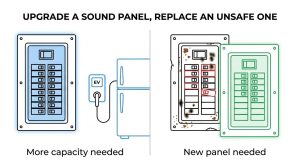
Side-by-side comparison of an electrical panel upgrade and a full electrical panel replacement in an older home.
A practical planning rule used in the industry is to keep the home’s load at or below about 80 percent of service capacity. Once a panel is operating too close to its limit on a regular basis, nuisance trips and overheating concerns become more likely.
Age also matters when it connects to equipment condition. Panels that are several decades old may still work, yet they can carry hidden concerns that only show up during inspection. Breakers may not seat well, bus bars may show wear, and corrosion or heat damage may be present. In some older homes, the brand of the panel itself changes the recommendation.
When electricians see outdated equipment with a history of reliability concerns, replacement often becomes the safer answer. That is especially true with older Federal Pacific or Zinsco panels, which are commonly flagged during evaluations because of long-standing performance and safety concerns.
Remodels, EV chargers, and electrification often change the answer
A home that seems fine today may need a different recommendation after a renovation plan is on the table.
Kitchen remodels, room additions, new HVAC systems, tankless water heaters, hot tubs, pool equipment, and workshop circuits all add load. EV chargers are now one of the biggest triggers for panel decisions, especially Level 2 chargers. Because EV charging is treated as a continuous load, the panel has to be evaluated with that sustained demand in mind.
This is why consulting a licensed electrician is crucial, as the question is often less about the current panel alone and more about planning when you might need to replace your electrical panel in the home’s next five to ten years. If a panel is already near capacity, adding a charger or a major appliance may push the system past what it can support safely.
A remodel is often the best time to address panel issues because the work, including permit fees, cost considerations, and the cost to replace an electrical panel, is already being planned, permitted, and budgeted, often in consultation with a utility company. Waiting can create duplication later, especially if a new appliance installation reveals that the service is too small.
When Pinellas County Electric recommends an electrical panel upgrade
Not every older Clearwater home needs the panel completely replaced. There are many cases where upgrading is the smart, efficient answer.
When the existing panel is in sound condition, has no major signs of heat damage or corrosion, and the main issue is capacity, an upgrade can give the home the room it needs at a lower cost compared to treating the panel as a total failure. This is common in homes that still have serviceable equipment but need support for new appliances, added circuits, or a shift from 100 amps to a higher amperage service size.
Pinellas County Electric often recommends an upgrade in situations like these:
- Existing panel condition: The panel is structurally sound and compatible with the planned work
- Capacity shortfall: The home needs more amperage for present or future demand
- New dedicated circuits: A remodel, home office, or appliance addition requires extra circuit space
- EV readiness: The panel can be modified to support a charger without replacing all equipment
- Code improvements: Grounding, bonding, or service components need updates while the panel remains viable
An upgrade is especially appealing when homeowners want to plan ahead. If central air replacement, kitchen updates, or vehicle charging are likely in the near future, increasing the service capacity now can make later projects much easier.
When Pinellas County Electric recommends a full electrical panel replacement
There are also clear cases where replacement is the better path. Safety issues, outdated equipment, and unreliable breaker performance usually place a home in this category.
A full replacement is often recommended when the existing panel shows physical deterioration or when the panel brand itself raises concern, considering the cost of replacing the entire system as an investment in safety. The goal is not just to make the home functional again. It is to give the property a safe, code-compliant electrical core that can support daily life with confidence.
Here are some common reasons a full panel replacement makes sense:
- visible corrosion or moisture damage
- scorched wiring or signs of overheating
- breakers that fail repeatedly or do not reset properly
- outdated Federal Pacific or Zinsco equipment
- limited space for needed circuits
- major service changes tied to large remodels
- recurring warning signs that point to deeper panel failure
In older homes, replacement is also often the right call when several problems stack up at once, including issues related to the electric meter. A panel may be too small, too old, and in poor condition. At that point, piecemeal repairs rarely offer the value, cost-effectiveness, or reliability that homeowners want.
Safety concerns are not just about convenience
One reason panel questions can feel confusing is that homeowners often experience the problem first as an inconvenience. A breaker trips. Lights flicker. The microwave and toaster cannot run together. Those issues are frustrating, but they can also point to larger concerns.
Electrical panels are designed to distribute power and protect circuits from overload. When the panel is compromised, that protective function can weaken. A breaker that trips once may be doing its job. A breaker that trips constantly, or a panel that shows heat damage, deserves a closer look.
This is especially important in older homes that have had partial updates over the years. A house may have a renovated kitchen and newer lighting while still relying on aging service equipment. The visible parts of the home can look modern while the core electrical infrastructure tells a different story.
FAQs
How do I know if my Clearwater home needs an electrical panel replacement or just an upgrade?
If your panel is over 25-30 years old, shows signs of damage, or is a recalled model, replacement is recommended. Upgrades are ideal when you need more circuits or capacity for new appliances or renovations.
What are the warning signs that my electrical panel is failing?
Common signs include frequent breaker trips, flickering or dimming lights, burning smells, buzzing sounds, or visible rust and corrosion on the panel.
Is it necessary to replace my panel if I’m installing an EV charger or remodeling?
Often, yes. Modern appliances and EV chargers require more power than older panels can safely provide. An upgrade or replacement ensures safe, reliable operation.
Are there specific panel brands or models that should always be replaced?
Yes. Panels from brands like Federal Pacific (FPE) and Zinsco are known safety hazards and should be replaced immediately.
How can Pinellas County Electric help with my electrical panel needs?
Our licensed electricians assess your current system, recommend the best solution, and ensure your home meets all safety codes and future power needs.
What a professional electrical panel evaluation includes in Clearwater
A proper panel recommendation should not be based on guesswork; often, a utility company can provide valuable insights during the evaluation process. It should come from an evaluation conducted by a licensed electrician that looks at both the equipment and the home’s actual electrical demand.
That evaluation typically includes the age and brand of the panel, service size, breaker condition, available circuit space, visible signs of wear, grounding and bonding, and the home’s planned additions. Load calculations matter here. If the household is adding a charger, a new HVAC system, or a major remodel, those future loads need to be part of the decision.
During an evaluation, the electrician is usually sorting the home into one of three paths:
- Keep and monitor: The panel is currently adequate and safe
- Upgrade capacity: The panel or service needs more room for electrical demand
- Replace the panel: The equipment itself is no longer the right foundation
For Clearwater homeowners, local code compliance, permit fees, and permitting are also part of the process, contributing to the overall cost to replace an electrical panel, especially when higher amperage is needed to meet increased demand. Panel work is not just about swapping hardware; sometimes, it’s crucial to replace your electrical system entirely to ensure safety and reliability. It needs to be done correctly, inspected where required, and built around the home’s current and planned usage.
A smart panel decision gives an older home more than extra power; it includes the possibility of upgrading the entire electrical system for improved safety and reliability. It gives the property a safer, more dependable base for everything that comes next, from everyday appliance use to major upgrades like EV charging and full remodels.


